
The Myth of an IRGC Coup
Succession, Militarization, and the Constraints on Power in Iran

Speculation about a potential coup by Iran’s Islamic Revolutionary Guard Corps (IRGC) has resurfaced at a familiar moment of strain. The debate is being driven by the convergence of three pressures that rarely overlap so starkly. First, the country is experiencing a renewed wave of public protests, marked by unprecedented scope and mobilization and by unusually high levels of repression. Second, the recent war with Israel introduced a strategic shock by revealing how heavily the system still depends on personalized authority at the top. Periods in which the supreme leader was less directly accessible during the war exposed limits in rapid response and coordinated decision-making. Third, and most consequentially, these developments unfolded as succession ceased to be a distant, managed question and instead became an immediate factor shaping elite behavior.
Taken together, these dynamics have created fertile ground for arguments that the IRGC – already deeply embedded in Iran’s political, economic, and security structures – might ultimately dispense with the clerical leadership and seize power directly. At first glance, this interpretation appears plausible. The IRGC commands the state’s primary coercive institutions, dominates key economic sectors, and has expanded its influence steadily over the past two decades. Yet this line of reasoning is incomplete.
In fact, while the renewed coup narrative reflects genuine instability and elite uncertainty, it fundamentally misreads the role of the IRGC and the architecture of power in the Islamic Republic. The central question is not whether the IRGC could overthrow the system it has helped build, but how power is structured, mediated, and constrained within that system; especially under conditions of succession and crisis. Understanding that distinction is essential for assessing Iran’s political trajectory in the period ahead.
A Parallel Force Designed Against Coups
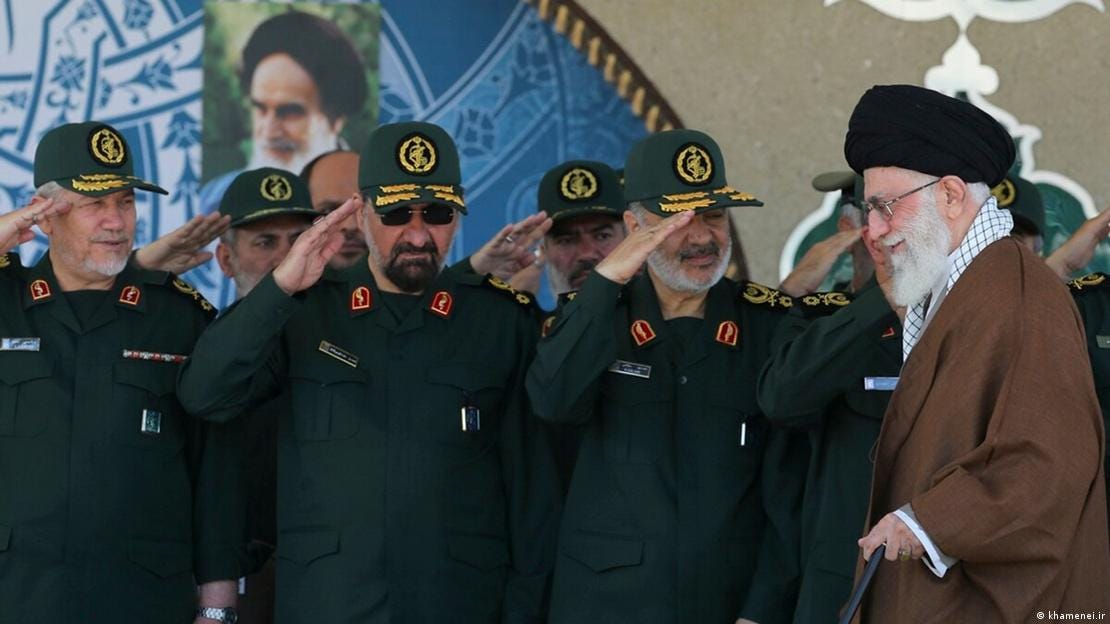
The IRGC was established in the immediate aftermath of the 1979 revolution, as an ideologically loyal force separate from the regular army, which revolutionary leaders deeply distrusted as a potential source of counterrevolution or coup. Until the end of the Iran-Iraq War, the IRGC had not fully developed into a conventional military institution. Although it gradually acquired clearer command structures during the war, it lacked fully standardized ranks and professional hierarchies. As such, it was conceived primarily as a parallel, regime-protective force rather than as an independent center of political authority, with the specific function of safeguarding the new revolutionary order from internal and external threats.
Over time, the IRGC evolved from an ideologically driven revolutionary force into a central pillar of state power. Following the end of the Iran-Iraq War, it underwent deep institutional entrenchment, expanding its role across security, politics, and the economy. This was not a sudden transformation but a gradual process, which was shaped by repeated moments of internal unrest and external pressure. One early indicator of the Guards’ growing political role came during the 1999 student protests, when senior IRGC commanders warned President Mohammad Khatami that failure to restore order would compel them to act. The episode signaled the emergence of the IRGC as an actor willing to intervene during domestic crises.
The 2009 Green Movement marked a more decisive turning point. In its aftermath, the IRGC’s domestic security function expanded substantially, particularly through the strengthening of its intelligence and counter-intelligence apparatus. From that point onward, the Guards became even more deeply embedded in regime survival strategies, playing a central role in repression, surveillance, and internal threat management.
Yet despite its power, the IRGC is not a monolithic actor. It functions as a federation of semi-autonomous power centers, including the Quds Force, Aerospace Force, Intelligence Organization, Basij, and Ground Forces, each with distinct operational mandates and institutional interests. These branches are coordinated through formal horizontal structures, but are ultimately held together by vertical loyalty to the Supreme Leader. Mechanisms of ideological and political control, parallel mandates, and multi-layered chains of command function as internal constraints that reduce the likelihood of unified action outside the system’s established hierarchy.
Taken together, these structural features complicate claims that the IRGC is poised to execute a classic military coup. An institution built as a parallel power center, embedded within the system and bound by multiple layers of internal coordination and external loyalty, is structurally oriented toward preserving the existing order rather than overturning it.
Leadership Attrition and the Problem of Authority
Ali Khamenei remains the central arbiter of Iran’s political system not because factionalism is absent, but because it is meant to remain contained within the system. His authority functions as the final coordinating mechanism among competing elites – clerical, political, and security-based – whose rivalries are real but bounded. Just as importantly, Khamenei continues to anchor the regime’s ideological reference point for mobilization. This role has taken on renewed significance under protest pressure, as the Islamic Republic increasingly relies on a hardened core constituency for social mobilization. The roughly 13 million voters who backed ultra-hardliner candidate Saeed Jalili in the 2024 presidential election – around 20 percent of the electorate – constitute a committed ideological base that remains loyal to the system even under deteriorating economic conditions. Maintaining cohesion among this segment requires a unifying figure with revolutionary and religious authority, a role no single person or institution can currently replicate.
At the same time, the IRGC has undergone a process of elite thinning that complicates its political capacity. Over the past several years, the Guards have lost senior commanders who combined military authority with political weight and elite networking power. Qasem Soleimani, while primarily responsible for external operations, was not detached from domestic politics. More recently, the removal of senior figures such as Hossein Salami, Amir Ali Hajizadeh, Mohammad Hossein Bagheri, and Gholam Ali Rashid has further narrowed the pool of commanders capable of bridging coercive power and elite bargaining. The cumulative effect has not been to make the IRGC more coup-prone, but rather to leave it with fewer consensus brokers, a more professionalized, military-bureaucratic senior leadership, and a greater dependence on the Supreme Leader’s office and formal consensus-building frameworks such as the Supreme National Security Council (SNSC) for political coordination.
The death of former president Ebrahim Raisi fundamentally reshaped this landscape. Raisi had been widely viewed as a leading contender for succession, enjoying clear backing from Khamenei and serving as a focal point for continuity within the system. His sudden removal reopened a succession process that had appeared increasingly managed. Indeed, Khamenei’s son, Mojtaba, has also long been discussed as a potential successor, and elements within the Supreme Leader’s inner circle actively promote his candidacy. Yet structural obstacles, including his limited clerical credentials and persistent resistance to dynastic succession, constrains his prospects.
Within this succession environment, informed sources pointed to a clear but contained division inside the IRGC while Raisi was still alive. One camp – associated most visibly with former IRGC chief commander Mohammad Ali (aka Aziz) Jafari – viewed Raisi as the preferred continuity candidate. A second camp, including figures such as former Guards commander and current parliament speaker Mohammad Bagher Ghalibaf, leaned toward Mojtaba Khamenei as the real center of gravity in succession politics. This alignment was never public and never confrontational, but it mattered, as it demonstrated that the IRGC was not unified behind a single succession outcome even as it remained loyal to Khamenei himself.
Raisi’s death abruptly upended this structured rivalry. With the removal of a candidate who appeared to have Khamenei’s backing, the succession landscape became far more opaque, depriving the system of a focal point around which elite consensus could coalesce. In this vacuum, recent post-12-Day War institutional moves are revealing. Efforts to strengthen the role of the SNSC and the establishment of a Defense Council point toward an emerging logic of councilization; a mechanism designed to manage leadership uncertainty and wartime contingencies by dispersing authority rather than concentrating it in a single successor. This shift suggests that, rather than preparing for a decisive handover or a power grab, the system is experimenting with collective governance as a way to postpone and contain succession conflicts under conditions of sustained external and internal pressure.
Pragmatism Without Rebellion
Over the past decades, the IRGC has become increasingly embedded in Iran’s political economy. That embeddedness has encouraged a measure of pragmatism – less in the sense of ideological moderation than as an effort to reconcile competing economic imperatives inside the system. The Guard’s expanding commercial footprint has produced divergent material interests that compel continual adaptation. Sanctions, smuggling, and other informal economic activity can generate profits for IRGC-linked networks, but the IRGC’s involvement in large-scale infrastructural and commercial projects simultaneously creates a dependence on predictability, capital mobility, and a degree of internal and external stability to protect accumulated wealth. These overlapping and sometimes contradictory incentives generate internal divergences over strategy and risk management, but not over regime survival.
Generational change reinforces this dynamic. Younger cohorts within the IRGC, especially at mid-level command and technical positions, were not shaped by the Iran-Iraq War but by the post-2003 regional developments, the Arab uprisings, the Syrian conflict, and the fight against ISIS. Their worldview tends to be more Iran-centric and security-nationalist than ideologically universalist. They prioritize deterrence, regional influence, and state capacity, often drawing lessons from state collapse and proxy warfare in areas like Syria rather than revolutionary mythology. This produces a form of operational pragmatism, i.e., greater attention to costs, sustainability, and tactical flexibility, without implying ideological moderation or political liberalization.
This pragmatism – and the distinct worldview it reflects – has at times translated into criticism of the revolutionary old guard on issues ranging from their economic involvement to foreign policy risk-taking. However, it does not amount to coup intent. Even if such criticism were to harden into dissatisfaction, the young guard lacks the internal and external conditions necessary to convert it into coordinated political action. Senior command positions remain concentrated in the hands of revolutionary-era officers whose authority is tied to the existing order, while younger cohorts have yet to develop the political networks or public profiles required to act independently. Any attempt to move outside established channels would therefore risk organizational fragmentation, elite resistance, and backlash from the regime’s own social support base. Adaptation thus occurs within the system’s boundaries rather than against them.
Succession, IRGC Consolidation, and Regime Transformation
At the core of the renewed coup debate lies a misreading of how power struggles unfold in the Islamic Republic. Succession, not rebellion, is the central fault line shaping elite behavior. The IRGC does not need to overthrow the system to influence outcomes. It has long done so through institutional positioning, veto power over unacceptable options, and bargaining within the regime’s tightly constrained political arena. These mechanisms are more effective and less risky than any overt seizure of power.
The persistence of coup narratives stems largely from an analytical tendency to treat the IRGC as a unified military actor standing apart from the political system. In reality, the Guards are a central pillar of regime governance, deeply embedded in its ideological foundations, institutional arrangements, and political economy. Their influence derives precisely from this embeddedness.
In this sense, Ali Alfoneh’s notion of a “creeping coup” offers a more useful corrective than predictions of an abrupt military takeover. Over the past decades, governance in the Islamic Republic has become increasingly securitized, with the IRGC expanding its role across security, economic management, and politics. This process has not displaced clerical authority; rather, it has integrated military-bureaucratic power into the existing order, creating a system in which the Guards are central to governance but remain bound by political and institutional constraints.
The critical distinction, then, is not between coup and no coup, but between rupture and transformation. A classic military coup against the Supreme Leader remains unlikely for structural reasons. Yet a post-Khamenei order in which power is reconfigured through negotiated, institutional, and incremental processes – further entrenching the position of the IRGC and the broader military-security elite within the state – is not only plausible, but already taking shape.
As such, the post-Khamenei trajectory is likely to encompass a range of outcomes rather than a single rupture. At one end of the spectrum, existing councils and security-oriented coordination mechanisms could harden into the effective center of the political system, anchoring authority in collective leadership dominated by the military-security elite. At the other, a political heavyweight from the old guard – such as Ghalibaf – could emerge as a focal point, providing continuity and coordination while managing a gradual reconfiguration of authority away from clerical primacy. Between these poles lies a hybrid scenario in which formal leadership is weakened or symbolic, while substantive authority is exercised through institutionalized bargaining among security, clerical, and political elites. In all cases, these dynamics point toward regime transformation rather than sudden systemic collapse.
Very interesting analysis. But in my observation of authoritarian regimes, there's always a pragmatic group, even if of low rank. The question is whether they're willing to take a risk.
Great piece!
"Yet despite its power, the IRGC is not a monolithic actor. It functions as a federation of semi-autonomous power centers, including the Quds Force, Aerospace Force, Intelligence Organization, Basij, and Ground Forces, each with distinct operational mandates and institutional interests."
This part really grabbed me, the acknowledgment that the IRGC is a complex and multilayered organization, that really couldn't have a unified decision making process from within itself.