
Why This Round of Protests in Iran Matters
From Market Crisis to Mass Mobilization and What Comes Next

The current wave of protests in Iran began in late December 2025, triggered by a sharp deterioration in economic conditions marked most visibly by a sudden collapse of the national currency and severe market disruptions. What initially emerged as economically driven unrest quickly translated into street protests, first concentrated in smaller cities and in areas linked to bazaar activity, where merchant closures and strikes signaled early resistance. Within days, the protests spread to major urban centers, including Tehran and Mashhad, expanding both geographically and politically.
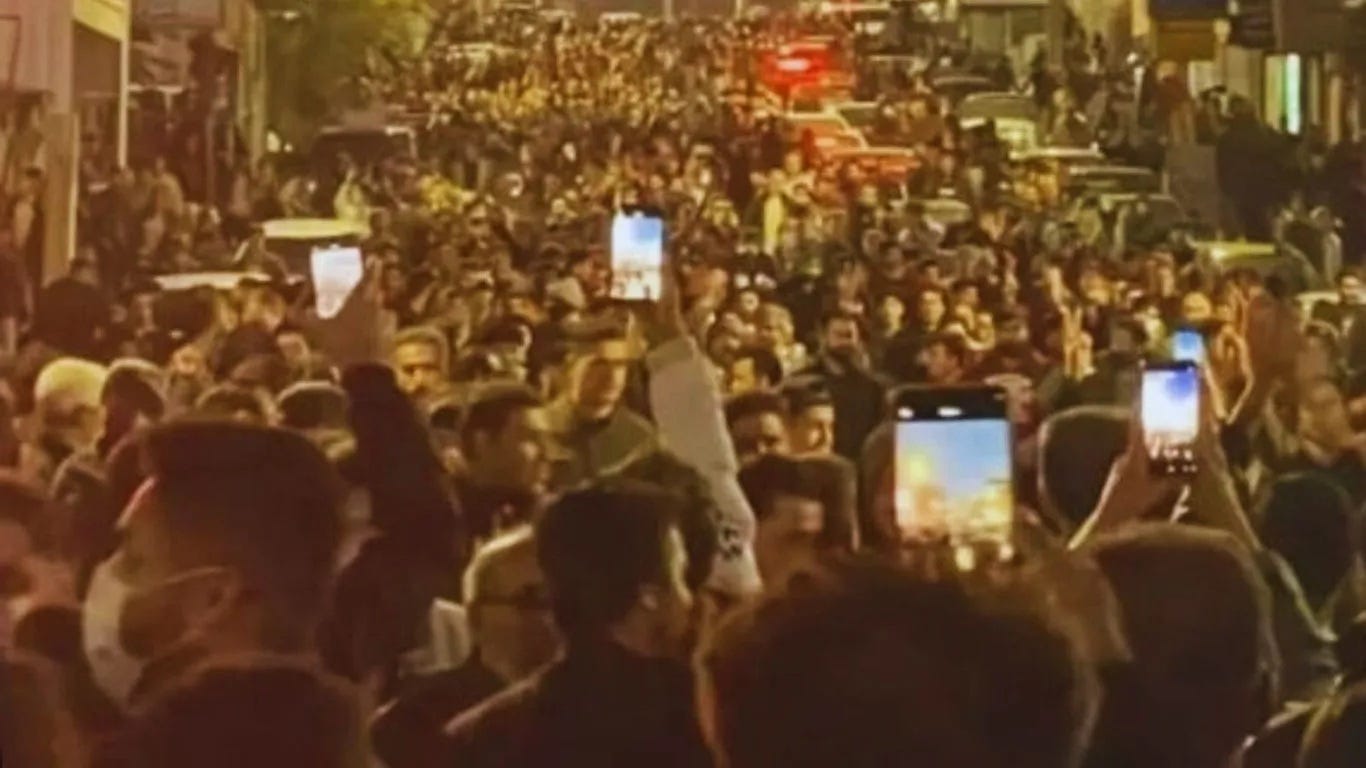
By January 9, large-scale demonstrations have taken place in multiple cities, representing some of the most significant urban mobilizations seen in years. The government’s response has escalated accordingly, culminating in a near-total internet shutdown that has effectively severed the country’s connection to the outside world and disrupted even state-affiliated online platforms.
As in previous protest cycles, these events have revived familiar questions about the stability of the Islamic Republic. Are these demonstrations merely another episode of unrest that the state can suppress and absorb, or do they represent a more fundamental challenge to the system? Answering these questions requires moving beyond day-to-day reporting and protest counts. It is important to identify how and why this wave of protests differs from earlier episodes of unrest, and what those differences reveal about the current political, economic, and security environment in Iran.
1. The Nature of the Trigger: From Policy Shock to Macroeconomic Rupture
This is not the first time economic grievances have driven protests in Iran, but it is the first time unrest has been catalyzed by a widely shared perception of systemic economic breakdown rather than a discrete policy decision or a narrowly defined shock. Previous protest waves illustrate the distinction clearly. In 2009, mass mobilization was rooted primarily in a political dispute over electoral legitimacy. The 2017-18 protests were economically motivated, but largely diffuse, localized, and concentrated in smaller cities, reflecting long-standing grievances rather than an acute rupture. In 2019, unrest erupted in response to a specific and sudden policy decision, namely the fuel price hike, which immediately altered household costs and triggered a violent confrontation between society and the state. The 2022 protests, by contrast, were driven by social and political demands centered on women’s rights, personal freedoms, and state authority over daily life.
What distinguishes the current wave is the nature of the economic trigger itself. The rapid collapse of the national currency has been widely experienced not as another episode of inflation – something Iranians have long endured – but as the loss of a monetary anchor altogether. Savings have been wiped out, prices have become unpredictable, and future planning has become nearly impossible for large segments of society. This has affected not only lower-income groups, but also the middle classes, professionals, and merchants whose economic calculations depend on stability rather than subsidies.
This kind of macroeconomic rupture undermines more than livelihoods. It erodes confidence in the state’s basic capacity to govern and manage the economy. By cutting across social classes and economic sectors, it also creates conditions for broader social mobilization than protests driven by single issues or isolated policy shocks.
2. The Bazaar Factor and the Erosion of a Foundational Regime Pillar
The role of the bazaar is significant not because of its size alone, but because of its historical and political weight within the Islamic Republic. The 1979 revolution was built in large part on a durable alliance between the clerical establishment and the merchant class, an arrangement that provided the new regime with financial resources, social legitimacy, and an effective mobilization network. Over time, the Islamic Revolutionary Guard Corps (IRGC) and the broader security apparatus replaced the bazaar as the regime’s primary pillar of stability. Yet the bazaar retained both symbolic importance and practical economic influence, particularly as an intermediary between state policy and society.
In the current protest wave, merchant closures, strikes, and market disruptions have emerged as an early and recurring feature, in some cases preceding large street demonstrations. These actions are not simply expressions of economic distress. They function simultaneously as a form of pressure on the state and as a political signal that a traditionally regime-aligned constituency is either unwilling or unable to absorb further economic shocks. Unlike spontaneous street protests, bazaar closures require coordination and collective decision-making, indicating a level of organization and shared grievance.
This shift matters for several reasons. First, it suggests erosion – if not outright loss – of a traditional support base that once helped stabilize the system during periods of crisis. Second, it raises the economic and political cost of repression, as coercion alone cannot easily force markets to function or restore confidence. Finally, bazaar participation allows protest dynamics to persist even when street mobilization is temporarily suppressed, complicating the state’s ability to contain unrest through conventional security measures alone.
3. Urban Mass Mobilization and the Shadow of 2009
Any comparison with 2009 must be made with caution. The demonstrations of 15 June (25 Khordad) 2009, when hundreds of thousands of people flooded the streets of Tehran, remain unmatched in sheer scale and remain a benchmark in the collective memory of the Iranians. There is no firm evidence that the current protests have reached that numerical magnitude. Nonetheless, the real value of the comparison lies less in numbers than in form.
What distinguishes the current wave from the protests of 2017-18, 2019, and even 2022 is the reemergence of large, largely peaceful demonstrations in major urban centers. Tehran and Mashhad have again become central theaters of protest, rather than peripheral or secondary sites. Participation appears visibly cross-class, encompassing students, professionals, merchants, and wage earners, rather than being concentrated primarily among economically marginalized groups or specific social constituencies.
This matters because the form of protest directly shapes the state’s response options. Peaceful mass mobilization in major cities places significant strain on the regime’s long-standing framing of unrest as the work of “rioters” or foreign-backed agitators. It also alters the cost-benefit calculus of repression. Heavy force against large, nonviolent crowds in central urban areas carries higher political risk, both domestically and internationally, than suppressing fragmented or localized unrest. As a result, urban mass mobilization constrains the range of tools available to the state in ways that recent protest waves did not.
4. Geography and Sequencing: From the Periphery to the Core
The geographic trajectory of the current protests is unusual and important. In their initial phase, demonstrations were concentrated in western provinces and smaller cities, comparatively marginalized areas that have traditionally been more prone to unrest and more heavily securitized. This early concentration shaped the way the protests were interpreted within regime-aligned circles. Commentators close to the government quickly framed events through a security lens, linking unrest in provinces such as Ilam and Kermanshah to their proximity to borders, strategic military infrastructure, and missile bases. These interpretations were often presented as evidence of foreign instigation.
It would be a mistake, however, to treat this framing as mere propaganda. It reflects genuine anxieties rooted in long-standing security doctrine and recent wartime experience. Peripheral unrest near sensitive military geography has always carried a different strategic weight for Tehran than protests confined to central urban districts.
What makes this wave distinct is how quickly that initial geography became politically irrelevant. Within days, protests diffused to the capital and other major cities, undermining the idea that unrest could be contained at the margins. As the protests moved to the core, economic grievances rapidly acquired overt political dimensions, and participation broadened well beyond the regions that initially drew security attention.
The speed of this transition is critical. It marks the collapse of the familiar localized unrest containment model, in which protests are isolated geographically and suppressed before they reach the political and economic centers of gravity.
5. Governing Under Two Pressures: Domestic Unrest and External Threats
One of the most consequential features of the current moment is that Iran is confronting sustained domestic unrest while simultaneously preparing for the possibility of renewed external conflict. This combination is rare in the post-revolutionary period. The last time the Islamic Republic faced comparable two-front pressure was during the early years of the Iran-Iraq War, when external invasion coincided with internal instability in several regions. That experience left a lasting imprint on Iranian security thinking, reinforcing a core principle: domestic order must be preserved during periods of external confrontation, and internal unrest should not be allowed to create strategic vulnerability.
The present context runs directly against that logic. The June 2025 war between Iran and Israel ended not with a formal ceasefire, but with an informal and fragile pause that remains politically and militarily ambiguous. Since then, both sides have continued to signal preparedness for another round of confrontation. Israeli officials have openly suggested the need to “finish the job,” while Donald Trump’s rhetoric has reinforced the perception in Tehran that U.S. backing for Israeli action remains a serious possibility. Against this backdrop, domestic unrest takes on a different strategic meaning.
It is important to distinguish between the Iranian government’s public narrative and its underlying concerns. Official discourse emphasizes foreign instigation and external manipulation of protests, but the deeper fear is not that outside powers will intervene to rescue protesters or engineer regime change directly. Rather, the concern is that sustained internal instability could lower the threshold for external actors to exploit the situation militarily, e.g., by striking nuclear, missile, or other strategic assets while Iran is politically and socially distracted.
This dual pressure helps explain several features of the state’s response. It sheds light on the apparent reluctance, at least initially, to deploy the IRGC on a massive scale for domestic repression and instead, rely more heavily on police and internal security forces in major cities. It also helps explain the severity of the current internet shutdown – as opposed to first few days of the protests – which appears aimed at coordination among protesters and regaining strategic control at a moment of heightened vulnerability.
6. No Economic or Diplomatic Off-Ramp
Even if the current protests are eventually suppressed, the structural drivers that produced them remain largely unresolved. Unlike some earlier episodes of unrest, the Islamic Republic today lacks a clear economic or diplomatic off-ramp that could plausibly stabilize conditions in the short term. Sanctions continue to constrain state revenue and access to global markets, while entrenched corruption and governance failures limit the effectiveness of domestic policy responses. At the same time, diplomatic channels that might ease economic pressure appear largely blocked, with no credible prospect of near-term sanctions relief.
This absence of an exit strategy has important implications. Repression can buy time, but it cannot restore purchasing power, stabilize the currency, or rebuild public confidence in economic management. Without a realistic path toward economic relief, the state is left managing symptoms rather than causes. This, in turn, increases the likelihood that unrest will recur, even if the current wave is temporarily contained.
The contrast with previous protest cycles is notable. In earlier moments of crisis, unrest coincided with ongoing diplomatic engagement, policy reversals, or temporary economic buffers that allowed the state to diffuse pressure. Today, those mechanisms are largely absent. The result is a narrower set of options for crisis management and a heavier reliance on coercion in a context where coercion alone is unlikely to deliver lasting stability.
7. Elite Fragmentation and the Succession Question
The current protest wave intersects with an unusually sensitive moment in the Islamic Republic’s elite politics, shaped by the growing immediacy of the succession question. Ali Khamenei’s age, persistent rumors about his health, and heightened security concerns during and after the recent conflict have intensified long-standing debates over leadership transition. Reports that Khamenei was less accessible even to senior officials during wartime have reinforced perceptions – within elite circles and beyond – that continuity at the top can no longer be taken for granted.
Against this backdrop, signs of heightened factional signaling have become more visible. Political figures who had been sidelined in recent years – like former president Hassan Rouhani – have reemerged in public discourse, offering commentary and positioning themselves as relevant voices without explicitly declaring political ambition. At the same time, ultra-hardline factions have sought to consolidate their influence. This reflects an environment in which multiple camps appear to be hedging against uncertain outcomes.
This contrasts with previous protest waves, when elite factions, despite deep internal rivalries, tended to close ranks in the face of mass unrest. The overriding imperative was regime survival, and internal disputes were temporarily subordinated to that goal. Today, cohesion appears thinner. While there is no clear evidence of organized elite defection, the persistence of factional maneuvering during a period of nationwide unrest could suggest a more fragmented political landscape.
Recent claims that certain factions are reaching out to foreign powers for support should still be treated as unverified and speculative. Nonetheless, even the perception of elite uncertainty can weaken crisis response. When cohesion at the top is in question, the regime’s ability to project confidence and decisiveness in the face of mass mobilization is diminished.
8. Opposition Symbolism and the Pahlavi Factor
One of the most visible features of the current protest wave is the prominence of slogans and calls associated with the pre-1979 monarchy and with Crown Prince Reza Pahlavi, marking the first time since the establishment of the Islamic Republic that a foreign-based political figure has demonstrably contributed to large-scale street mobilization inside the country. His calls for demonstrations appear to have functioned as a timing and coordination mechanism, helping to concentrate protest activity and encourage turnout at critical moments.
This development, however, should not be misread as evidence of ideological consolidation or the emergence of a unified opposition leadership. Participation in demonstrations following Pahlavi’s calls does not necessarily indicate broad support for the restoration of monarchy or endorsement of a specific political project. For many protesters, invoking Pahlavi serves a tactical purpose of signaling unity, amplifying numbers, and increasing pressure on the state rather than articulating a shared vision of Iran’s political future.
The significance of the matter lies in the distinction between mobilization capacity and leadership. Effective opposition movements require coalitions that bridge ideological, social, and organizational divides. At present, such a coalition remains absent. Pahlavi’s symbolic role may help overcome coordination problems in the short term, but it does not resolve deeper questions about representation, strategy, or future governance.
This ambiguity matters because it shapes both protest dynamics and regime calculations. Symbolic unity can sustain momentum temporarily, but without organizational depth and political cohesion, it may not translate into lasting structural challenge. The current prominence of Pahlavi therefore reflects both a new mobilizing tool and the enduring fragmentation of Iran’s opposition.
Conclusion: What We Can Say – And What We Cannot
Taken individually, none of the elements shaping the current protest wave is entirely unprecedented in the history of the Islamic Republic. What makes this moment distinctive is their convergence. A macroeconomic rupture that has destroyed confidence in basic economic management coincides with visible bazaar participation, renewed urban mass mobilization, and an unusually unfavorable external security environment. At the same time, the absence of a clear economic or diplomatic exit, coupled with growing uncertainty surrounding elite cohesion and succession, has narrowed the regime’s room for maneuver.
These factors collectively increase the political and strategic significance of the current unrest and raise the risks associated with both repression and inaction. They do not, however, predetermine outcomes. The Islamic Republic retains coercive capacity, and the protests have not yet produced an organized alternative capable of converting mass mobilization into a decisive political challenge. The central question, therefore, is not whether collapse is inevitable – and it may be – but how compounded constraints and vulnerabilities are reshaping the state’s ability to manage crisis, project authority, and contain instability over time.
Good breakdown, but it also matters that the government’s own response — cutting the internet, labeling protesters as puppets of foreign powers, and cracking down hard — is feeding the narrative that this isn’t a blip you can manage. Once people see repression instead of reform, the protest becomes about legitimacy, not just prices.