

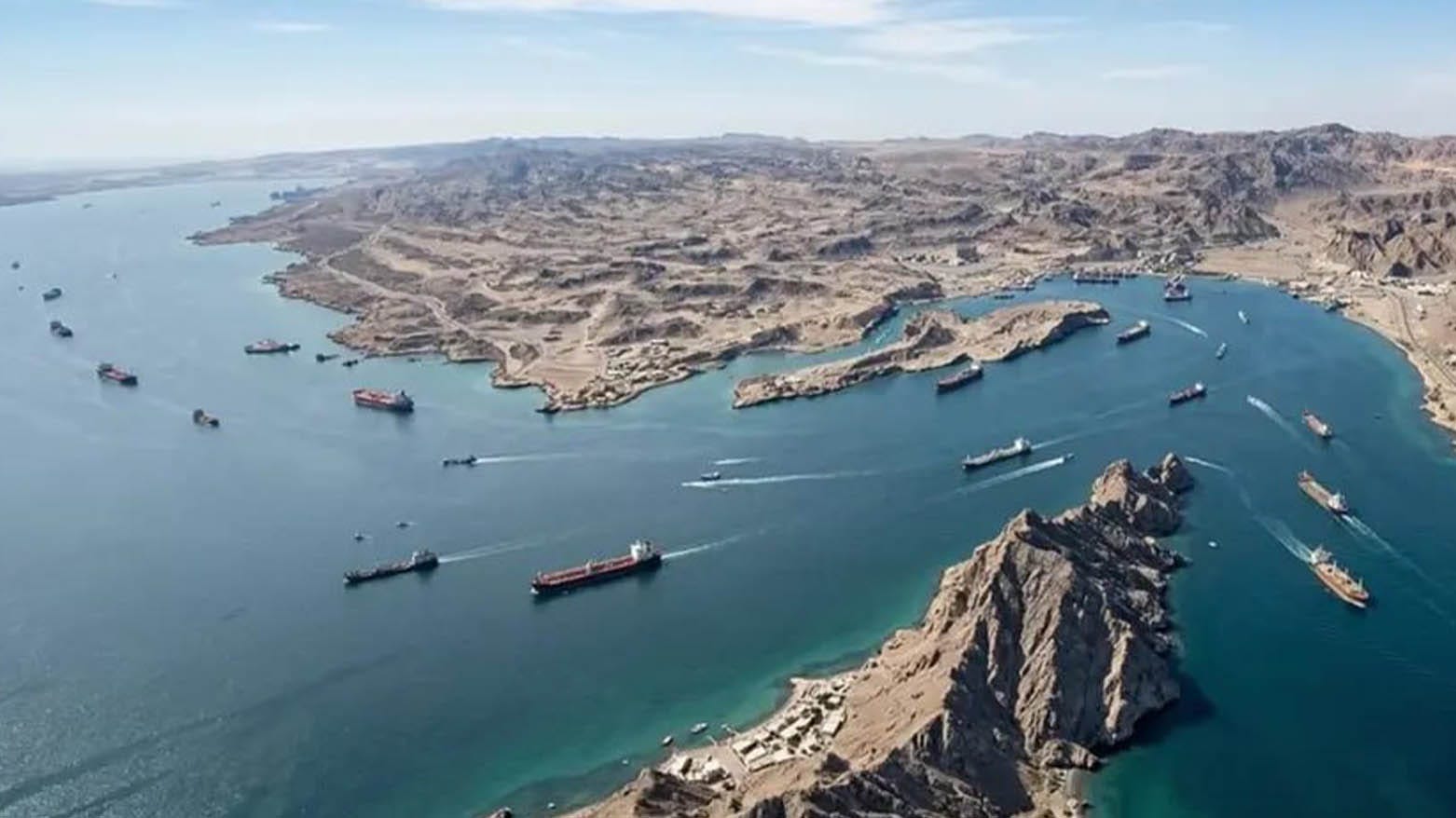
U.S. President Donald Trump’s harsh ultimatum on April 5 – that the United States could target Iran’s civilian infrastructure if the Strait of Hormuz is not reopened – was meant to signal urgency and push Tehran to loosen its grip on the strategic waterway. But developments on the ground suggest a different trajectory. In Tehran, parliament is advancing a draft bill to formalize a new framework for managing transit through the strait, including the imposition of tolls. At the same time, Iranian and Omani officials are engaged in discussions over future arrangements governing passage, highlighting their position as the strait’s two coastal states. These moves do not reflect a state preparing to yield under pressure. They point instead to an effort to consolidate and institutionalize control.
More than a month into the war, Iran no longer appears to view its position in the Strait of Hormuz as a temporary lever to influence the course of the conflict or to extract short-term concessions. Instead, it is increasingly treating it as a longer-term strategic asset – one that can be carried into the postwar environment and used to shape its outcome. In this emerging framework, control over the strait serves three interrelated purposes: it provides a source of economic leverage at a time when Iran faces the prospect of costly postwar reconstruction; it creates opportunities for political recognition, as states are compelled to engage directly with Tehran to secure passage; and it offers a mechanism for redefining regional dynamics on terms more favorable to the Islamic Republic.
Seen in this light, Iran’s current approach helps explain why it is unlikely to respond to external pressure by simply reopening the strait and restoring prewar conditions. Doing so would mean relinquishing what has become one of its most effective instruments of leverage at precisely the moment when that leverage is most valuable. Instead, Tehran appears to be pursuing a different objective: stabilizing its position, translating wartime control into longer-term advantage, and, if necessary, exchanging that advantage only for gains that extend well beyond the immediate cessation of hostilities.
From Chokepoint to Strategic Asset
At the outset of the war, the Strait of Hormuz was framed primarily as an instrument of escalation. Iranian messaging emphasized the possibility of full closure, the use of mines, and the disruption of global energy flows as a means of deterring further attacks and imposing costs on the United States and its partners. In that phase, the strait functioned largely as a latent threat that could be activated if pressure on Iran crossed certain thresholds. The objective was not to transform the status of the waterway but to use it as leverage within the broader logic of deterrence and retaliation.
Over time, however, both Iranian behavior and official rhetoric began to shift. Rather than moving toward a full closure of the strait, Tehran adopted a more calibrated approach. Shipping was not uniformly blocked but selectively restricted. Certain vessels were allowed to pass, often after signaling neutrality or engaging directly with Iranian authorities, while others – particularly those linked to the United States and its partners – faced the risk of missile and drone attacks. This was not simply a matter of operational constraint or caution. Instead, it reflected a deliberate choice to replace the binary logic of open versus closed with a more flexible system of controlled access.
This shift carries important strategic implications. A full closure of the strait would have imposed immediate and dramatic costs on Iran itself, but it would also have been difficult to sustain and potentially too escalatory in ways that could narrow Iran’s room for maneuver. By contrast, selective control allows Tehran to maintain continuous pressure while preserving optionality. It enables Iran to calibrate its actions, reward or penalize specific actors, and adjust the level of disruption without committing to a single, irreversible course.
More importantly, this approach has begun to alter how the strait is conceptualized within Iranian strategic thinking. The emphasis is no longer primarily on the ability to shut it down, but on the ability to manage it. The distinction between the two concepts is important. Closure is inherently temporary and simply a tool of crisis. Management, by contrast, implies duration. It suggests the possibility of shaping the rules governing transit, defining who can pass and under what conditions, and, over time, embedding those practices in a more formalized framework.
Recent political and legal messaging reinforces this interpretation. Discussions in Iran’s parliament about establishing a structured regime for transit – including the imposition of fees and the differentiation between categories of vessels – point to an effort to move beyond ad hoc wartime measures. Similarly, the emerging emphasis on coordination with Oman reflects an attempt to ground this approach in the geography and legal status of the Strait of Hormuz, where the two countries share responsibility as coastal states. In this context, references to sovereignty and territorial waters are part of a broader attempt to recast the strait not as an international passage, but as a space subject to greater regional control.
These developments suggest that Iran is no longer treating Hormuz as a temporary bargaining chip to be activated and then set aside. Instead, it is beginning to treat it as a strategic asset in its own right. It can generate ongoing leverage and potentially outlast the war that brought it to the forefront. This evolution also helps explain a broader shift in Iran’s hierarchy of tools. For years, the country’s nuclear program occupied the center of its bargaining position vis-à-vis the United States and its partners. Today, control over the Strait of Hormuz offers a different kind of leverage: one that is immediately visible in global markets, continuously exercisable, and less dependent on prolonged negotiation cycles and diplomatic processes.
In this sense, the transformation of Hormuz reflects a significant reorientation in how Iran understands power and leverage in the context of prolonged confrontation. Rather than relying solely on capabilities that can be traded away in partial agreements, Tehran appears to be prioritizing instruments that can be sustained, adjusted, and, if necessary, reactivated over time. The Strait of Hormuz, in its current form, fits that logic.
Economic Leverage and the Politics of Recognition
While the first shift – transforming Hormuz from a chokepoint into a managed asset – is conceptual, the second is functional. Iran is not simply holding the strait; it is beginning to extract layered benefits from that position. These benefits are not limited to wartime coercion. Instead, they extend into the economic and political domains in ways that reinforce one another and, taken together, help explain why Tehran is unlikely to relinquish its current leverage without substantial returns.
The most immediate dimension is economic. The war has imposed significant costs on Iran’s infrastructure and industrial base, and Iranian policymakers are already thinking in terms of reconstruction. In this context, control over the Strait of Hormuz offers a rare opportunity. Unlike many of Iran’s other assets, it generates leverage continuously rather than episodically. By maintaining selective disruption rather than full closure, Tehran can continue exporting its own oil while benefiting from elevated global prices. At the same time, the emergence of a system in which states and companies seek assurances or arrangements to secure passage creates the potential for additional revenue streams. Proposals in the Iranian parliament to impose transit fees on vessels passing through the strait reflect this logic. The objective is essentially to convert geographic position into a predictable source of income.
This economic dimension is closely tied to a second layer, namely the gradual production of political recognition. As conditions in the strait have tightened, an increasing number of actors have found it necessary to engage directly with Iran to ensure safe passage. In practice, this has meant dealing with institutions that remain politically contested in the international arena, particularly the Islamic Revolutionary Guard Corps (IRGC). Even where formal positions have not changed – where sanctions remain in place or designations persist – the operational reality is different. States that require access to the strait are, in effect, acknowledging Iran’s role in governing it.
This form of recognition is incremental and often informal, but it is strategically meaningful. It normalizes a pattern of interaction in which Iran is treated not merely as a disruptor, but as an authority whose cooperation is necessary for the functioning of a critical global transit route. Over time, such patterns can reshape expectations about legitimacy. They also create incentives for external actors to maintain working relationships with Tehran, even in the absence of broader political agreements.
The third layer is bargaining power, which emerges from the combination of economic leverage and political recognition. Because Iran’s current position in the Strait of Hormuz is effective but difficult to replicate under normal conditions, it is perceived in Tehran as a unique and time-sensitive opportunity. This has direct implications for how Iranian policymakers approach the prospect of negotiation. Any return to the prewar status quo – meaning unrestricted passage without Iranian conditions – is unlikely to be offered as an initial concession. Instead, it is more likely to be treated as an end state, contingent on the achievement – and fulfillment – of broader objectives, from sanctions relief to security assurances.
In this sense, the Strait of Hormuz functions as a form of strategic insurance. It provides Tehran with a mechanism not only to extract gains, but also to hedge against unfavorable outcomes. Relinquishing control prematurely would remove one of the few instruments through which Iran can impose costs beyond its immediate geography. It would also risk returning the strategic environment to a configuration in which Iran has fewer tools to deter renewed pressure or attack.
There is also a forward-looking element to this calculation. Iranian officials appear aware that the current configuration of leverage may not be permanent. External actors are already exploring ways to mitigate dependence on the Strait of Hormuz, whether through alternative routes or coordinated security arrangements. Once such mechanisms are fully developed, Iran’s ability to exercise similar control could diminish. This reinforces the perception that the present moment offers a narrow window in which leverage is at its peak. The logical response, from Tehran’s perspective, is to stabilize that leverage, formalize it where possible, and, if it is to be traded away, ensure that it is exchanged for gains commensurate with its strategic value.
These dynamics suggest that Iran’s approach to Hormuz is not driven by a single objective. Rather, it reflects an attempt to align economic necessity, political positioning, and strategic bargaining within a single framework. The result is a model of leverage that is more durable than the crisis-driven tactics of the past, and one that is likely to shape Tehran’s negotiating posture for as long as the current conditions persist.
Using Hormuz to Redefine the Persian Gulf Order
Beyond attempts to extract economic and political gains, Iran’s approach to the Strait of Hormuz is also about reshaping the regional environment in which those gains will be sustained. In this sense, the strait is being used as a tool to influence alignments across the Persian Gulf and to renegotiate the broader terms of regional security.
A central objective appears to be preventing the emergence of a unified Gulf position against Iran. Throughout the war, Tehran has demonstrated a pattern of differentiated engagement with regional actors, combining pressure with selective accommodation. This has been particularly evident in its approach to maritime access. Rather than imposing uniform restrictions, Iran has allowed passage for certain states while constraining others, effectively creating a system in which access to the strait is conditioned on political behavior. The result is a dynamic in which Gulf states must weigh their strategic relationships – not only with the United States, but also with Iran – against the practical requirements of maintaining trade and energy flows.
Oman occupies a distinct place within this framework. As the only other coastal state bordering the Strait of Hormuz, Muscat provides Iran with a potential partner in conferring legal and political weight to any future arrangements governing transit. The ongoing discussions between Iranian and Omani officials are therefore significant in what they signal about Tehran’s intentions. By emphasizing the “exclusive right” of the two coastal states, Iran is advancing a view of the strait that places greater authority in regional hands, as opposed to treating it as a space governed primarily by international norms shaped by external powers.
At the same time, Iran’s calibrated flexibility toward other regional actors suggests an effort to manage tensions rather than escalate them indiscriminately. The decision to permit the passage of certain shipments – such as Saudi oil destined for Pakistan while both countries were engaged in diplomatic efforts to end the war – illustrates how control over the strait can be used to reward specific forms of engagement. This approach allows Tehran to maintain pressure while leaving open channels for selective cooperation, thereby complicating the formation of a cohesive regional front.
This strategy also connects to a longer-standing Iranian objective of reducing the role of external military powers in the Persian Gulf. By demonstrating that maritime security in the Strait of Hormuz can be contested – and, at least in part, managed – by regional actors, Iran strengthens its argument that the presence of outside forces is not a stabilizing necessity but a source of instability. In this framing, the current situation becomes evidence that regional states must ultimately take greater responsibility for their own security arrangements, potentially on terms that are more accommodating of Iranian interests.
At the same time, Iranian policymakers appear aware that this leverage is not without limits. Alternative export routes developed by countries such as Saudi Arabia and the United Arab Emirates offer partial means of bypassing the strait, and over time these could be expanded. Yet such alternatives are unlikely to fully replace the role of Hormuz, particularly given its importance not only for oil, but for broader commercial and logistical flows. Even where dependence can be reduced, the strait will remain a central node in the global trading system and, therefore, a persistent source of influence for whichever actor is able to shape access to it.
It is this combination of immediate leverage and enduring relevance that underpins Tehran’s current approach. Control over the Strait of Hormuz allows Iran to operate simultaneously on multiple levels: to influence regional alignments, to contest external military presence, and to embed itself more deeply in the practical functioning of global energy and trade networks. In doing so, it is attempting not simply to respond to the pressures of the current war, but to redefine the environment in which future confrontations would take place.
For that reason, even in the event of negotiations, Iran is unlikely to treat the strait as a preliminary concession. As mentioned before, it is more likely to hold this leverage in reserve until the later stages of any diplomatic process, using it to secure outcomes that extend beyond an immediate ceasefire. These would likely include sanctions relief, compensation for wartime damage, and some form of assurance against the recurrence of conflict. Even then, the underlying logic of Iran’s position suggests that the possibility of renewed restriction would remain part of its strategic toolkit.
In this sense, the Strait of Hormuz is no longer simply a theater of the current war. In fact, it has become one of the war’s most consequential stakes and, for Tehran, one of its most valuable instruments for shaping what comes after.
Viewed from the perspective of the Persian Gulf monarchies, Iranian control of the Strait of Hormuz will turn them into Iranian vassals.
Saudi Arabia's East-West pipeline, built during the Iran-Iraq War at a cost of $5B, has a capacity of 7m bbd; 20m bbd transit the Strait of Hormuz. Clearly the cost of avoiding Iranian domination is well within the budgets available to the Persian Gulf monarchies.
Railroads to parallel the pipelines can then erase Iran's remaining geographic advantage.
Unfortunately I would imagine Trump would never be willing to concede to Iran having any sort of scheme over the strait. I'm not sure what the alternative would be. I would think a more reasonable president would find it better that Iran's primary leverage for deterrence would be economic (the strait) and not military/nuclear. Although I more reasonable president wouldn't have entered this position in the first place.
Beyond the obvious humanitarian disaster, I'm not sure what trying for force Iran into being a failed state means for the strait. Does that just lead to the strait being mined and what military power that still exists working to keep the strait closed entirely?