
The War to Win the Peace
Why Tehran Sees Diplomacy as a Contest Over Strategic Leverage

On July 1, Iranian and American technical teams held indirect talks in Doha, mediated by Qatar and Pakistan, to follow up on the implementation of the memorandum of understanding signed by Presidents Trump and Pezeshkian on June 17. Deputy Foreign Minister Kazem Gharibabadi announced afterward that working groups had been formed to oversee implementation and, eventually, to negotiate a final agreement. Qatar’s Foreign Ministry spoke of “positive progress.”
On the same day, U.S. Central Command announced that the USS Boxer amphibious group, carrying the 11th Marine Expeditionary Unit with some 2,500 Marines and sailors, had entered its area of responsibility “as part of a scheduled deployment.” Vice President J.D. Vance, meanwhile, suggested in an interview that the administration’s approach was to use the MoU period to replenish the world’s oil reserves and then “see where the hand is.”
These developments capture the deepening contradiction of the post-MoU period. Diplomatic contacts have continued and even become more institutionalized. The Strait of Hormuz is more open than at any point since the war. Iranian oil exports have partially resumed under 60-day Treasury waivers, and mechanisms for managing escalation – working groups, mediators, reported communication channels – have multiplied. Yet the atmosphere in Tehran has grown more suspicious with each passing day.
The reason is that Iranian officials and analysts increasingly view the current period as a struggle over whether the instruments that pushed Washington toward the MoU will still exist by the time serious negotiations begin. Iran entered the 60-day window believing it had emerged from the war with four forms of leverage: operational control over disruption in the Strait of Hormuz, a regional stake in Lebanon secured through the MoU’s first article, the bargaining value of an unaccounted-for nuclear program, and the prospect of large-scale economic relief, including a proposed $300 billion investment fund. The prevailing assessment in Tehran is that all four are being weakened simultaneously – through U.S.-Gulf diplomacy, new maritime arrangements, a separate Israeli-Lebanese track, demands on the nuclear file, and continued military positioning – so that Iran arrives at the final negotiation with fewer options and a diminished ability to impose costs. And this concern over erosion is merging with a second, darker one: that Washington may be preparing to resort to renewed coercion if Tehran refuses to accept the altered terms.
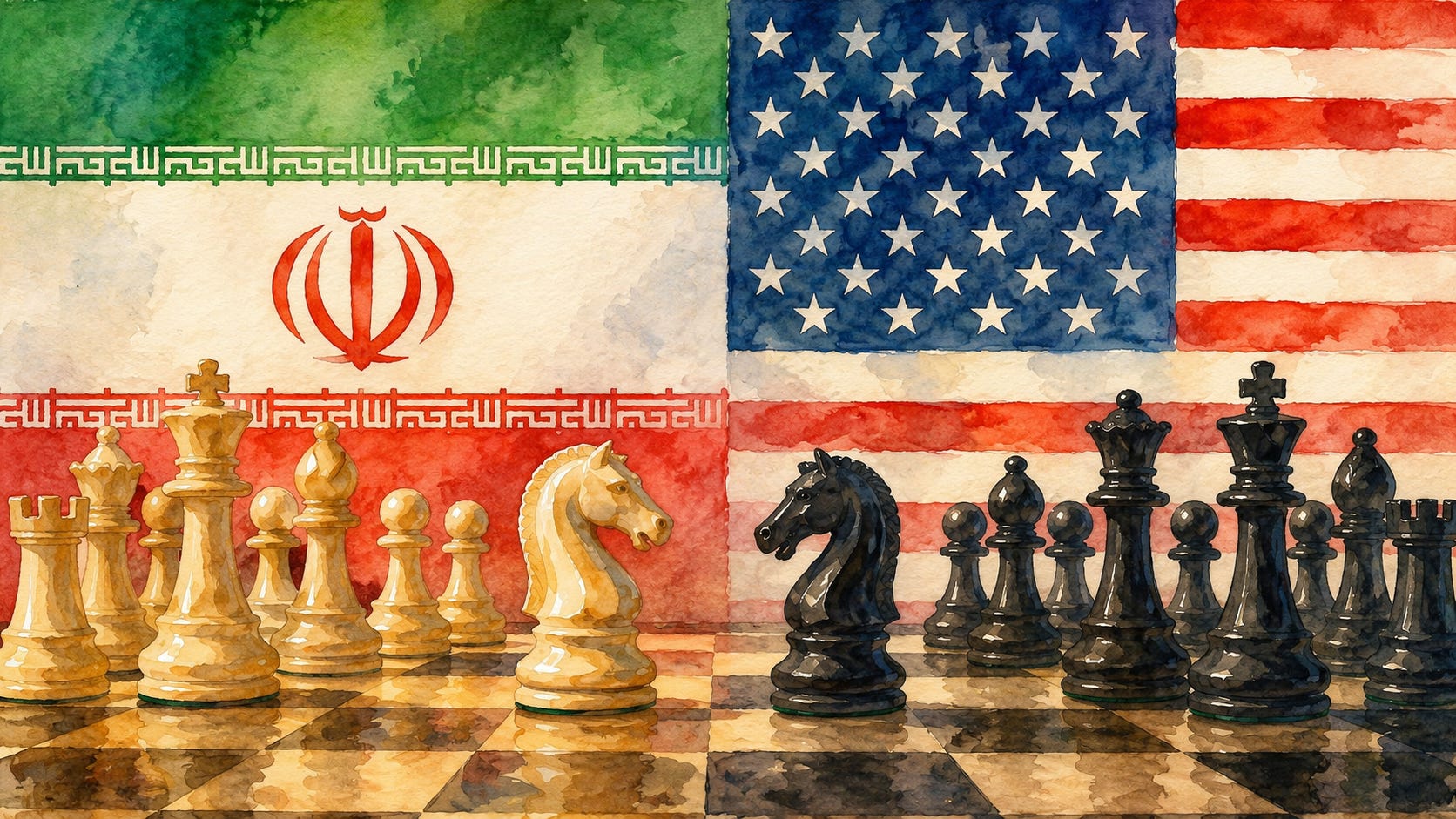
A Single Contest Across Four Fronts
From Tehran’s perspective, the disputes accumulating around the MoU are connected fronts in one contest rather than separate policy disagreements. The clearest illustration is the Strait of Hormuz.
Iran’s concern in the Strait goes well beyond the question of “transit fees,” which Iranian officials have repeatedly disclaimed any intention of imposing. What Tehran seeks to preserve is the political fact created by the war: that access through Hormuz has become inseparable from Iran’s security interests. Its objective during the 60-day period has been to convert that fact into a lasting regional arrangement – first with Oman, then with the other Persian Gulf littoral states. The June 22 visit by chief negotiator Mohammad Bagher Ghalibaf and Foreign Minister Abbas Araghchi to Muscat, and the first Iran-Oman joint committee on June 29, were steps in that direction, producing an agreement in principle to develop provisions for “service-related costs” and future management of shipping.
The parallel developments of late June point in the opposite direction. The southern route announced by Oman and the International Maritime Organization (IMO) on June 25 – running through deep Omani internal waters – was established in coordination with the IMO but without coordination with Iran. The IRGC Navy responded by declaring the route “unacceptable” and “posing serious safety risks,” while insisting that coordination with Iran remains mandatory for all transit.
Meanwhile, Secretary of State Marco Rubio’s Gulf tour produced a joint statement with GCC foreign ministers rejecting “any tolls, fees, or attempts to assert control over the Strait” and insisting on unconditional freedom of navigation. The Omani foreign minister publicly ruled out transit tolls, and the Sultan’s meeting with President Macron in Paris yielded a joint commitment to reopening the Strait without conditions or restrictions, including discussion of joint mine-clearing operations – prompting an Iranian warning to France to stay away.
In Tehran’s reading, the southern route is far more than an emergency shipping measure. It normalizes an alternative operational reality, in the sense that the more traffic moves through arrangements outside Iranian control, the less valuable the leverage Iran accumulated during the war becomes – with or without an agreement. Kpler recorded 34 verified crossings on June 30, describing “continued operational continuity, but not a settled return to normal routing.” Every one of those crossings, from Tehran’s point of view, chips away at the premium Washington would otherwise have to pay for a formal reopening.
Lebanon follows the same logic. Iran fought to make Lebanon part of the MoU because it believed a ceasefire limited to Iran alone would leave Hezbollah exposed to a separate Israeli campaign. The framework agreement announced between Israel and Lebanon on June 26 is read in Tehran as a means of redefining that provision from the outside. Its stipulation that no state or non-state actor may claim to act on behalf of the Lebanese government is understood as directed specifically at Iran. In other words, once the Lebanese government itself has formally delegitimized such claims, Iran’s ability to invoke Israeli operations in Lebanon as a violation of the wider ceasefire collapses.
Washington, in this reading, has avoided openly repudiating the MoU’s Lebanon article. It has instead allowed a separate diplomatic and security process to hollow it out. Also, since Hezbollah has officially rejected the framework and refuses to disarm, the same agreement furnishes Israel with a standing justification to remain on Lebanese territory and continue targeting the group under the banner of self-defense. Speculations about possible outside assistance to the Lebanese army in disarming Hezbollah, whether through Syria or through “Emirati-financed mercenary forces,” deepens the perception that the Lebanese balance is being altered before Iran can convert its regional linkage into a binding political gain.
The Gulf dimension extends the pattern into the economic realm. The Rubio-GCC statement named Iran’s ballistic missile program, drone program, and support for regional partners and proxies as threats to be confronted, and made trade and investment – including participation in the proposed $300 billion fund – conditional upon “the cessation of destabilizing behavior.” The MoU itself contains no such conditions. Tehran therefore sees Washington using its regional partners to introduce into the next phase issues that were left out of the war-ending framework, effectively converting a narrow ceasefire arrangement into a broad regional bargain before delivering the benefits Iran expected from the initial deal.
The nuclear file completes the picture. On June 22, the Foreign Ministry spokesman confirmed that Iran’s pattern of cooperation with the IAEA would continue exactly as it has since June 2025: case-by-case access to undamaged facilities, and none to the damaged ones – a position Iran justifies by invoking the MoU’s “status quo” clause (article 9). The underlying calculation is straightforward. The location and condition of Iran’s stockpile of highly enriched uranium – some 440 kilograms enriched to 60 percent, unverified by inspectors for over a year – remain uncertain to outside powers. Should the IAEA establish them with precision while sanctions relief, the unfreezing of assets, Hormuz arrangements, and Lebanon all remain unsettled, Iran would have surrendered its most valuable remaining card. If negotiations then failed, that information could guide efforts to locate, seize, or destroy what remains of the program.
This is why Iran insists, invoking Article 13 of the MoU, that nuclear negotiations begin only after the implementation of the articles on frozen assets, Hormuz, and Lebanon is underway. Washington wants inspections early, precisely because it is reluctant to extend economic and political benefits while Tehran retains that capability and that uncertainty. The dispute over the IAEA is, in this sense, a dispute over who moves first.
Seen from Tehran, then, shipping routes, the Lebanese framework, Gulf conditionality, and inspection access are different theaters of a single contest on whether the war’s practical gains can be converted into lasting leverage, or quietly dismantled during the period formally devoted to diplomacy.
When Erosion Meets the Fear of Another War
Iranian concerns rest on more than negotiation disputes, and are reinforced by an accumulation of military, security, and hybrid signals that Iranian observers interpret as preparation for a possible next phase of the war.
The shift in atmosphere dates to the night of June 26, when CENTCOM struck positions on Sirik Island – reportedly linked to Iran’s missile and drone programs and radar installations – in response to an Iranian attack on a Singapore-flagged vessel the previous day. Iran answered by targeting U.S. positions in Kuwait and Bahrain; the exchanges continued and intensified through the night of June 27-28, with CENTCOM describing the strikes as more significant than on previous nights and Iran escalating from drones toward missile attacks on Kuwait. Both sides framed each action as enforcement of the MoU against the other’s violations, and the agreement survived each round nominally intact. However, what alarms Tehran is the reappearance of a pattern that defined the state of affairs before the MoU.
The fear driving Iranian responses is “normalization” of strikes on Iranian territory. The concern is less that Washington seeks an immediate return to a forty-day war than that it could establish a pattern in which the United States retains the right to strike Iranian territory in the name of maritime security or self-defense, while Iran is expected to absorb those strikes or answer only within limits that preserve the wider arrangement.
Iranian strategic debate has moved accordingly. The questions now under discussion are whether responses should exceed the adversary’s threshold rather than match it, and whether Iran should at some point escalate preemptively to restore unpredictability – a marked departure from the strategic patience that long defined the Islamic Republic’s regional posture. The disproportionate IRGC response on the second night of exchanges appears to reflect exactly this reasoning.
U.S. force posture deepens the suspicion. The Boxer group’s arrival is read in Tehran against the memory of earlier build-ups and persistent concern over possible operations against Iranian islands and coastal infrastructure – and, in the Iranian interpretation, as a breach of Article 9 of the MoU, under which the United States committed to refrain from increasing its regional military presence during the 60-day period. CENTCOM’s stated emphasis on deterrence and readiness offers little reassurance when The Wall Street Journal simultaneously reports that Trump, while preferring diplomacy for now, retains limited military options in response to perceived Iranian breaches. Vance’s remark about replenishing oil reserves before seeing “where the hand is” slots neatly into an Iranian assessment – circulating since the end of the war – that the timeline for rebuilding U.S. strategic petroleum reserves, drawn down to their lowest level since 1983, defines the window within which Washington would avoid a new war, and that diplomacy may therefore be buying time rather than resolving the conflict.
A third layer comes from Iran’s periphery. Recent days have brought intensified clashes with insurgent groups in the country’s western and southeastern regions, IRGC ambushes against armed formations, cyberattacks that disrupted Iranian banks for days, and open-source reports of expanded U.S. logistical and military flights over the region. On July 1, Mustafa Hijri, secretary general of the Kurdistan Democratic Party, told VOA Persian that a ground attack on Iran is on the agenda, adding that his forces would advance to Urmia if conditions allowed.
Individually, each development admits alternative explanations. Collectively, they fit a pre-existing Iranian expectation of multi-front conflict, in which external strikes, ethnic insurgency, cyber operations, and efforts at domestic destabilization function as interconnected instruments. Israel’s Defense Minister Israel Katz sharpened the picture further by warning that Israel stands ready to launch an independent campaign against Iran should Tehran respond to developments in Lebanon and strike Israel.
Caution is warranted here. Iranian analysts themselves are divided, and these signals fall well short of proving that a renewed war is imminent or even planned. What they demonstrate, however, is a growing conviction in Tehran that the United States is using the MoU period to test Iranian red lines, improve its own military position, and reduce Iran’s coercive leverage, while keeping limited force available should Tehran reject the next round of demands. The more the MoU comes to be seen as cover for strategic preparation, the harder it becomes for Iranian leaders to make concessions without appearing to have traded wartime sacrifice for a temporary pause.
Defending Leverage Without Closing the Door
This is the dilemma now narrowing Iran’s choices. Tehran can ill afford to watch its Hormuz leverage erode, Lebanon slip out of the diplomatic framework, financial relief become conditional, and nuclear ambiguity dissolve ahead of a final bargain. Yet every instrument available for resisting these processes carries its own cost. Pressure on shipping can be cast as a violation of the MoU, inviting blame for the agreement’s collapse. Escalation over Lebanon can be presented as Iranian disruption of a Lebanese political process. Withholding inspections can be described as proof that Tehran was never serious about a final agreement. Pushback against Gulf conditionality risks deepening regional isolation at the very moment Iran needs Gulf capital for reconstruction.
Three features of Iran’s emerging response follow from this constraint. First, Tehran is likely to continue relying on calibrated, indirect pressure rather than broad escalation. Hormuz remains its most efficient instrument, as it imposes costs on Washington and global markets while sparing Iran a direct military front with Israel. This helps explain why maritime restrictions and signaling have persisted alongside continuous diplomatic contact, including the reported channel for managing frictions in the Strait, whose existence the IRGC has publicly denied even as Iranian media confirmed it.
Second, Iran’s internal balance makes passive accommodation politically prohibitive. Ultra-hardliners’ criticism of the Pezeshkian administration and of Ghalibaf as chief negotiator has intensified; several members of the Assembly of Experts issued a statement demanding revenge for the killing of Ali Khamenei, prompting the Assembly’s secretary to disown it and Pezeshkian to mobilize senior clerics in support of the diplomatic track. Each U.S. strike on Iranian territory, each Israeli operation in Lebanon, and each new Gulf condition strengthens the hardline argument that the MoU was a mistake from the outset – and obliges the government to demonstrate that it is resisting, rather than accepting, a U.S.-designed sequence of concessions.
Third, the Iranian leadership’s postwar strategy is oriented toward preserving room for maneuver rather than choosing cleanly between diplomacy and confrontation. It means keeping the negotiating process alive while delaying nuclear concessions, resisting a return to the prewar maritime status quo, holding Lebanon inside the diplomatic framework, and preventing Gulf economic engagement from becoming contingent on a rollback of its regional posture.
Iran therefore approaches the next stage of negotiations from a position that is simultaneously more confident and more anxious. It believes the war demonstrated its capacity to impose costs Washington could find intolerable. It also fears those gains are being reduced one by one, through arrangements that stop short of a new war while steadily reshaping the environment in which the next war – or the next agreement – would take place. The most dangerous feature of the present moment lies here, in the fact that diplomacy itself has become part of the conflict. The question for Tehran has shifted accordingly: no longer whether it can preserve diplomacy, but whether it can preserve enough leverage within diplomacy to make a final settlement worth accepting.
Brilliant and insightful, as always.
Great analysis Azizi! A very interesting read.