
Is a New Round of War Becoming Inevitable?
Tehran Expects a Different Kind of War

During his recent visit to Tehran, Pakistan’s Interior Minister, Syed Mohsin Raza Naqvi, reportedly carried a new American message aimed at finding common ground for a diplomatic agreement with the Islamic Republic. Yet in Tehran, the initiative is widely interpreted not as evidence of an imminent diplomatic breakthrough, but rather as an effort to contain a deteriorating situation whose trajectory increasingly appears to point toward renewed confrontation.
In recent days, Iranian media have begun disclosing portions of the demands being exchanged through intermediaries. Although the details remain incomplete, the broad contours already point to deep structural incompatibilities. Washington appears focused on Iran’s highly enriched uranium stockpile, restrictions on its nuclear infrastructure, and a phased approach to sanctions relief, while Tehran frames any settlement around a full end to the war, the inclusion of Lebanon, reparations, and recognition of Iran’s role in the Strait of Hormuz.
At the same time, both the military and economic dimensions of the confrontation remain unresolved and increasingly volatile. Iran continues to impose restrictions on maritime traffic through the Strait of Hormuz, while the United States maintains its naval blockade of Iran. Volatility in oil markets remains severe, and concerns over the long-term impact on global energy flows continue to grow. Donald Trump’s recent trip to China also failed to produce any visible breakthrough capable of easing the broader geopolitical tensions surrounding the conflict.
As a result, the current ceasefire increasingly appears to be only a temporary pause in hostilities rather than a path toward a durable political settlement. Although the large-scale exchange of fire has stopped, the underlying logic of the confrontation remains unchanged. The central question now is not whether escalation may return, but how the next phase of the conflict could unfold, what objectives it would seek to achieve, and whether another round of war would fundamentally alter the strategic deadlock that emerged during the previous forty days of fighting.
Worlds Apart
The immediate obstacle to a diplomatic solution lies in what the two sides appear to be demanding. Fars News Agency, which is close to the Islamic Revolutionary Guard Corps (IRGC), has published what it describes as the main elements of the latest American demands. In Tehran, the report has been interpreted as evidence that Washington is still approaching the talks from the assumption that Iran must absorb the consequences of the war and accept terms that would effectively amount to capitulation.
According to the Fars report, the U.S. position centers on removing Iran’s stockpile of highly enriched uranium from the country, sharply limiting its nuclear infrastructure, refusing compensation for wartime damages, releasing only part of Iran’s frozen assets, and keeping the question of other regional fronts – particularly Lebanon – separate from any U.S.-Iran arrangement. Even if the report does not reflect the final American position, it points to a broader pattern in the Trump administration’s approach: Washington seeks to front-load the nuclear file while deferring the wider regional questions.
Iran’s reported counter-position moves in the opposite direction. Tehran is not presenting the nuclear issue as the starting point of a settlement, but rather as one component of a broader framework for ending the war. Its demands reportedly include ending the conflict across all regional fronts, lifting sanctions, releasing frozen assets, compensating Iran for war-related damages, and recognizing Iran’s sovereignty and exclusive role – together with Oman – in managing the Strait of Hormuz. In other words, Iran is attempting to convert the leverage it gained during the war – above all in Hormuz and through the linkage of regional fronts – into the foundation of a new regional settlement.
This is where the two positions become structurally incompatible. Washington appears to be seeking a return to a controllable version of the prewar order, in which Iran’s nuclear capabilities would be constrained, its regional reach contained, and maritime access restored without granting Tehran any formal role in regulating the Strait. Iran, by contrast, is trying to prevent exactly that outcome. For Tehran, a ceasefire that simply restores the old balance would not truly end the conflict; it would merely recreate the conditions for another round of confrontation in the future.
The Lebanon file makes this especially difficult. From Tehran’s perspective, any agreement that eases pressure on Iran while leaving Hezbollah exposed would fragment the so-called “unity of the fronts” and allow Israel to weaken Iran’s regional network sequentially. This is why Iranian officials and state-affiliated commentators have continued to insist that Lebanon cannot be separated from the broader ceasefire architecture. For the U.S. and Israel, however, compartmentalization is precisely the point. Treating Iran, Hezbollah, Hormuz, and the nuclear issue as separate files gives them greater flexibility to apply pressure where they see advantage. Tehran’s position is designed to deny them that flexibility.
This also explains why the Pakistani channel remains active but fragile. Islamabad is still trying to keep the indirect track open, and regional actors such as Saudi Arabia and Egypt have signaled support for diplomacy, largely because a renewed war would carry immediate consequences for energy markets and Persian Gulf security. But support for mediation is not the same as convergence over substance. The more the respective demands become visible, the clearer it becomes that the disagreement is not only over terms, but over the meaning and outcome of the war itself.
Trump’s public warnings have reinforced that perception. His repeated statements that time is running out for Iran, and that Tehran must move quickly toward accepting U.S. terms, are interpreted in Tehran as part of the same coercive framework as the blockade. Netanyahu’s signaling has had a similar effect. His comments that Israel is closely monitoring Iran, combined with continued pressure on Lebanon, suggest that Israel does not view the ceasefire as a comprehensive or binding regional framework.
The result is a process that, rather than reducing tensions, increasingly appears to be contributing to perceptions that another round of conflict is becoming more likely. In Tehran, the widening gap between the two sides’ positions is now widely interpreted as evidence that the current negotiations may be unable to produce a sustainable settlement under existing conditions. Recent developments – from renewed American and Israeli threats to ongoing U.S. military preparations across the region – have reinforced concerns that the diplomatic track may be approaching its limits and may now be serving primarily to test the final boundaries of compromise before both sides shift back toward escalation.
Preparing for a Different War
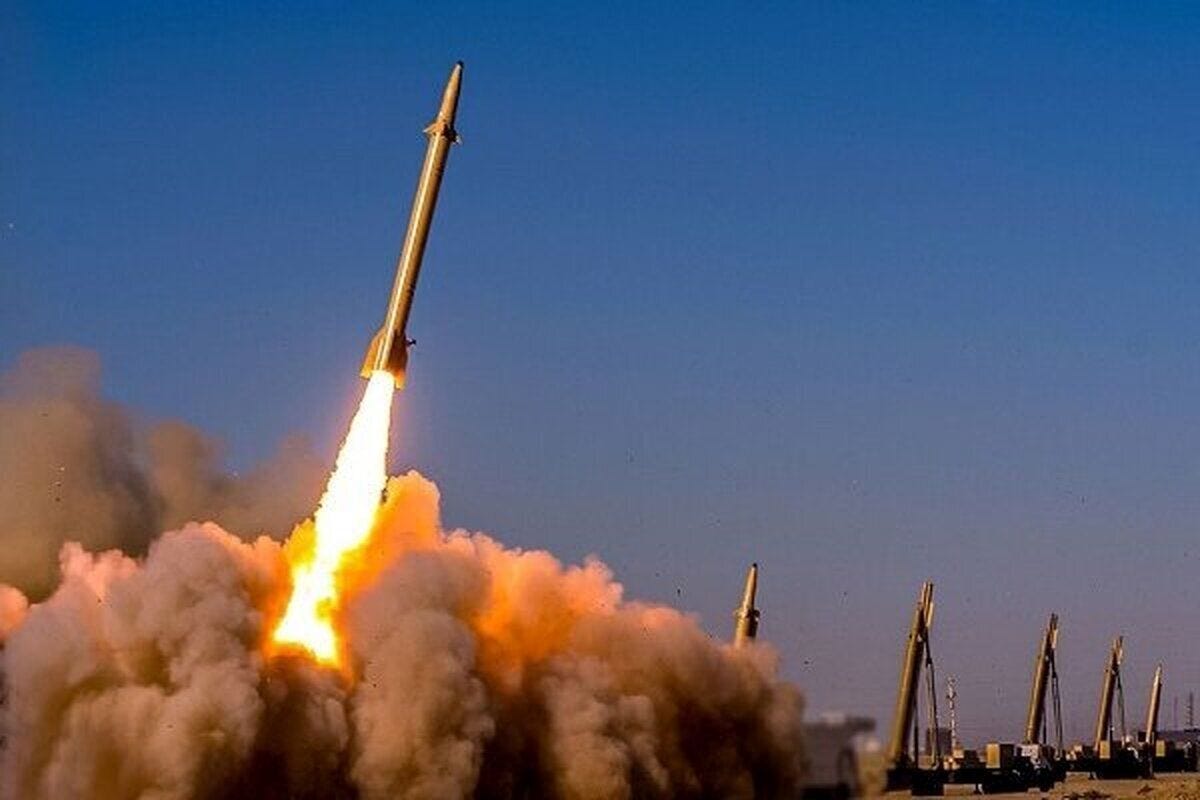
The central debate in Tehran now concerns the likely shape of a renewed confrontation and how it would differ from the previous forty days of war. Over time, the first round of conflict evolved into a war of attrition. Iran sought to prolong the confrontation, preserve its missile capabilities, impose costs on U.S. assets and Gulf energy infrastructure, and use the Strait of Hormuz as leverage. Israel, by contrast, sought to compress the timeline by expanding its target set inside Iran to include infrastructure, industrial facilities, and elements of the state’s internal security apparatus. That divergence in time horizons remains central to the current moment.
For Trump, time is increasingly becoming a strategic problem. The naval blockade has intensified pressure on Iran, but it has not forced Tehran to accept American terms. The Strait of Hormuz remains only partially accessible, global energy markets remain vulnerable, and Pakistan’s mediation efforts have so far failed to bridge the gap between the two sides. Although the Pakistani channel remains active, reports that Trump is considering military options as negotiations stall have reinforced perceptions that diplomacy may be running out of time. Trump also claimed on May 18 that he postponed a planned military strike on Iran at the request of Iran’s Arab neighbors in order to give diplomacy another chance. In any case, he appears to have little patience left for a prolonged process.
This is why a short, high-intensity campaign could define the next phase of the confrontation. From Washington’s perspective, such an operation could serve several purposes simultaneously: intensify the pressure created by the blockade, weaken the Iranian government by damaging the country’s energy and economic infrastructure, prevent Tehran from rebuilding its military capabilities, and establish a more favorable balance before returning to diplomacy. In this scenario, the objective would be to generate within a brief period of intense military escalation the level of pressure that the blockade alone might otherwise require months to produce.
The nuclear file adds another layer to this logic. The unresolved question of Iran’s highly enriched uranium stockpile remains central to the American approach. Washington has increasingly focused on preventing Iran from accessing material believed to remain buried or inaccessible after the Twelve-Day War of June 2025. Senator Lindsey Graham’s call for creating a “circle of death” around Iranian nuclear sites, together with Trump’s emphasis on preventing Iran from recovering what he has described as “nuclear dust,” illustrates how the nuclear issue could provide a justification for renewed military action even in the absence of a broader decision to restart the war in full.
Military deployments have reinforced these concerns. The United States has continued to strengthen its military posture in the region, including through the deployment of amphibious forces, Marines, warships, and naval assets linked both to enforcing the blockade and – potentially – to reopening maritime routes. Reporting on the U.S. buildup has highlighted the presence of the Tripoli and Boxer amphibious groups, with thousands of Marines and sailors adding expeditionary capacity to the region. At the same time, there has been a notable increase in military logistical flights to the region, particularly to U.S. bases in Jordan and to Israel.
In Tehran, these moves are interpreted primarily as indications that the United States is preserving the option of renewed escalation, possibly through heavy strikes on energy infrastructure, limited special forces operations around nuclear sites, or attempts to seize and occupy Iranian islands in the Persian Gulf. These concerns are reinforced by the broader pattern of the previous war, during which U.S. and Israeli attacks increasingly targeted not only military facilities but also civilian infrastructure, transport nodes, internal security institutions, and border regions.
That last element is especially important because a renewed campaign may not remain confined to conventional military strikes. During the first round of the war, attacks in western Iran targeted border guard positions, police facilities, and IRGC-linked infrastructure. In Tehran, those attacks were widely interpreted as part of a broader effort to pave the way for potential incursions by Kurdish armed insurgent groups into the country. Even during the ceasefire, Iranian authorities have continued to warn about the possible activation of ethnic insurgent groups in Iran’s western and southeastern regions and have claimed to intercept weapons shipments allegedly linked to external actors. As a result, many in Tehran increasingly expect that a future confrontation could combine strikes on nuclear and energy infrastructure with attempts to generate internal instability and coordinated pressure along Iran’s peripheral regions.
That possibility is closely tied to the broader logic of a short but high-intensity escalation. From the perspective of both the U.S. and Israel, combining external military pressure with internal destabilization could increase the cumulative shock imposed on the Iranian state within a limited period of time. This is also where Netanyahu’s calculations become important. For Netanyahu, a short escalation could help prevent Iran from rebuilding deterrence and keep Hezbollah under pressure before any diplomatic settlement freezes the regional balance. For Trump, it could offer a way to claim that military pressure achieved what diplomacy and the blockade alone could not.
The Limits of Escalation
The problem with a new round of war is that it may not produce what its advocates expect. The previous forty days of conflict inflicted serious damage on Iran’s military, industrial, and security infrastructure, but it did not force Tehran to accept Washington’s terms. Nor did the subsequent naval blockade compel Iran to restore the Strait of Hormuz to its prewar status. If anything, the war appears to have reinforced a harder view in Tehran: that concessions made under pressure would only invite another cycle of attack, ceasefire, blockade, and renewed conflict.
Iran has also used the ceasefire period to absorb lessons from the war. Tehran’s command structure was damaged, but not paralyzed. Its missile infrastructure was degraded, but not eliminated. U.S. intelligence assessments suggesting that a large share of Iran’s missile arsenal remains operational mean that the next confrontation would not hinge on whether Iran can respond, but on how it would respond. That distinction has become central to the debate inside Tehran. In other words, the primary debate is no longer about capability, but about strategy.
One conclusion gaining ground in Tehran is that Iran’s previous response was too calibrated. During the first round of the war, Tehran maintained a relatively limited but sustainable tempo of missile and drone attacks on Israel, partly because it anticipated a prolonged conflict – some Iranian analysts speak of expectations of 90 to 100 days of war – and wanted to preserve its arsenal. Iran also focused heavily on U.S. bases, radar facilities, and regional military infrastructure, calculating that degrading American support systems would gradually make Israel more vulnerable. But the persistence of Israeli attacks during the war, especially against Iran’s civilian infrastructure, has strengthened the argument that this approach failed to impose sufficient direct costs on Israel.
A renewed war would therefore likely generate a different Iranian response. Tehran may seek to front-load its missile campaign, launching more intensive strikes against Israel from the outset rather than preserving a slower tempo over time. The objective would be not only to demonstrate capability but also to restore deterrence quickly, before the United States and Israel can define the escalation ladder on their own terms. This could include more simultaneous launches from multiple bases, greater use of heavier warheads, and closer coordination with Hezbollah, Iraqi Shiite armed groups, and the Houthis if the conflict widens.
The Persian Gulf would be another central theater in any renewed confrontation. The UAE has moved to the center of Iranian threat perceptions, not only because of its close relationship with Israel, but also because of its role in maritime logistics, its proximity to disputed islands, and reports suggesting that figures within the Trump administration have encouraged the UAE to consider seizing Iran’s Lavan Island in exchange for a possible Emirati contribution to the war effort.
For Tehran, any move against Iranian islands or Hormuz-related infrastructure could justify a much broader response against Emirati targets. Bahrain would also remain vulnerable because of its hosting of U.S. military forces, while Kuwait and Qatar could again be drawn into the conflict if their territories are perceived as facilitating operations against Iran.
This is why another war could deepen rather than resolve the crisis. A short American or Israeli campaign against Iran’s energy sector or infrastructure might impose additional costs, but it would also create incentives for Tehran to expand the battlefield. Iran could intensify restrictions in the Strait of Hormuz, widen targeting operations into the Sea of Oman, activate pressure in the Red Sea through the Houthis, strike regional energy infrastructure, and increase pressure on U.S. forces across the Gulf and Iraq. The result would likely be an even more dangerous and regionally expansive confrontation.
There is still a narrow diplomatic window. Recent reporting by Tasnim suggesting possible American flexibility on waiving some oil sanctions while negotiations continue indicates that neither side has fully abandoned bargaining. But time is increasingly working against diplomacy. The more the blockade hardens, the more Iran treats Hormuz as irreversible leverage; the more Israel pressures Hezbollah, the more Tehran comes to see diplomacy as a trap; and the more Trump escalates his warnings, the more Iranian decision-makers prepare for the possibility that negotiations are merely a prelude to another strike.
In that sense, the danger is not only that war may resume. It is that another round of war could leave all sides confronting the same unresolved conflict, but with fewer restraints and a much wider battlefield.
Excellent. Thank you Hamidreza!
The ‘ceasefire’ is another round of the American war on Iranians.