
Iran’s “No War, No Peace” Dilemma
An Unstable Equilibrium of Pressure and Diplomacy

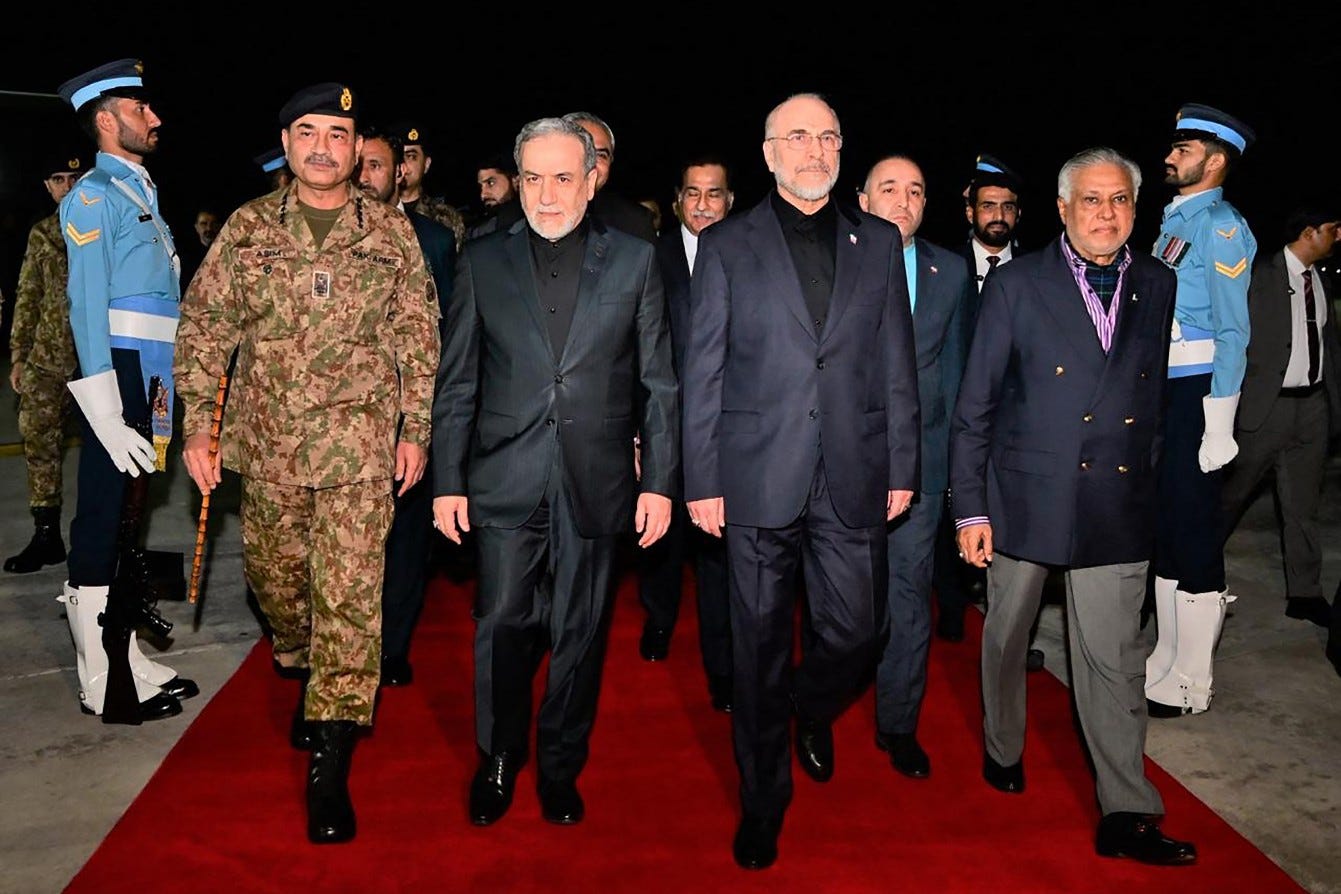
On April 25, Iranian Foreign Minister Abbas Araghchi visited Islamabad for consultations with Pakistani officials involved in mediating between Iran and the United States. The visit was followed by plans to travel to Oman and Russia, with a return to Pakistan expected thereafter. Although the sequence of stops reflects an active diplomatic track, it also underscores its fragmented character. There was no direct engagement with U.S. officials in Islamabad, and the cancellation of a possible visit by American envoys Steve Witkoff and Jared Kushner showed that communication between the two sides remains indirect and conditional.
Araghchi’s itinerary had important meaning in itself. Pakistan continues to serve as the primary mediation channel, but the subsequent stops point to the issues that now define the negotiations. Oman is central to discussions over the future of the Strait of Hormuz and the terms of maritime access, while Russia is one of the few actors positioned to play a role in addressing the nuclear file, particularly questions related to Iran’s stockpile of highly enriched uranium and the sequencing of any potential arrangement. These movements suggest that diplomacy is proceeding across multiple tracks, each tied to a specific dimension of the broader confrontation.
At the same time, these diplomatic efforts are unfolding under conditions that remain shaped by pressure. The U.S. naval blockade continues, Iranian officials maintain that no direct negotiations will take place under such circumstances, and military signaling around the Strait of Hormuz has intensified. The ceasefire that halted large-scale hostilities has not produced a stable political framework. Instead, it has given way to a more indeterminate phase in which talks continue alongside economic coercion, maritime tensions, and the persistent possibility of renewed escalation.
Within Iranian debates, this evolving situation is increasingly understood as a form of suspended conflict. The concern is not only that negotiations may fail, but that they may persist without resolving the underlying confrontation, leaving Iran exposed to sustained pressure while limiting its ability to respond in kind. In this context, the current diplomatic activity reflects an effort to prevent the consolidation of such a scenario and to shape the terms of any future settlement before it hardens into a new strategic equilibrium.
Diplomacy in a Prolonged Ceasefire
The current round of diplomatic activity is taking place against the backdrop of a ceasefire that has not resolved the underlying conflict, but has instead altered its form. While large-scale military operations have subsided, the broader structure of pressure remains intact. The United States has maintained – and intensified the implementation of – its naval blockade, Israel continues to operate across regional fronts, and Iranian officials have signaled that the possibility of renewed military action remains real. In this environment, the ceasefire is not being treated in Tehran as a transition point toward stabilization, but as a phase whose trajectory is still contested.
This reading shapes Iran’s approach to negotiations. Tehran has not withdrawn from diplomacy, but it has defined clear conditions for engagement. The refusal to enter direct talks with the United States under the current circumstances reflects a broader concern about sequencing. From the Iranian perspective, entering negotiations while the main instruments of pressure remain in place risks institutionalizing an imbalance in which concessions are demanded under duress, without corresponding guarantees. As a result, the diplomatic process has remained indirect, mediated through regional actors, and structured in a way that allows Iran to engage without formally accepting the terms under which the talks are taking place.
The extension of the ceasefire without a defined endpoint has further reinforced these concerns. Within Iranian discussions, such an arrangement is often seen as creating a state of suspension, in which the costs of the conflict continue to accumulate while the potential benefits of escalation are deferred. Economic pressure persists through the blockade and its effects on trade and energy flows, while the absence of active hostilities limits Iran’s ability to impose reciprocal costs. At the same time, the United States retains flexibility in its posture, preserving the option to intensify pressure or return to military action if conditions shift in its favor.
This combination has led to a growing perception that the current phase may favor a gradual erosion of Iran’s position. Over time, sustained economic strain, continued regional pressure, and uncertainty about the trajectory of the conflict could narrow Tehran’s strategic options. The concern is not limited to external dynamics. Prolonged ambiguity also complicates internal decision-making, requiring the leadership to balance the demands of negotiation, deterrence, and domestic stability without a clear end state in view.
Araghchi’s recent travels reflect an effort to manage this situation across multiple fronts. By maintaining the mediation channel through Pakistan, engaging Oman on questions related to the Strait of Hormuz, and turning to Russia on the nuclear file, Iran appears to be working to prevent the diplomatic track from narrowing into a single framework defined by U.S. priorities. The objective is not only to keep negotiations alive, but to shape their structure in a way that preserves room for maneuver. In that sense, the current diplomatic effort is less about moving toward a rapid settlement than about avoiding the consolidation of a prolonged equilibrium in which pressure persists without resolution.
Hormuz and the Logic of Leverage
Alongside its diplomatic activity, Iran has continued to frame the Strait of Hormuz as the central point through which the broader balance of pressure is defined. Recent statements by the Ministry of Defense, the Khatam al-Anbiya Central Headquarters, and the Islamic Revolutionary Guard Corps (IRGC) have converged around a consistent message: control over the Strait is a strategic necessity and a fixed element of Iran’s position. In official language, this control is vaguely described as “smart,” but the underlying implication is more direct. Access to the waterway is no longer treated as a given, but as something that can be conditioned in line with the course of the conflict.
This posture reflects a broader effort to translate geographic position into negotiating leverage. The continuation of the U.S. naval blockade has reinforced this approach. Iranian officials have indicated that any further interdiction or seizure of vessels would be met with a response, signaling that maritime pressure will not remain one-sided. At the same time, the emphasis on control suggests that Tehran is seeking to shape not only wartime dynamics, but also the terms under which maritime access would function in any post-conflict arrangement.
The role of Oman is closely tied to this question. As a littoral state on the opposite side of the Strait, with direct geographic and economic stakes in its functioning, Muscat occupies a position that links the military and diplomatic dimensions of the issue. This was reflected in consultations between Iranian and Omani officials during the war over the future of the waterway. Engagement with Oman therefore carries significance beyond routine mediation. It points to the reality that any durable understanding over the strait will have to account for the interests and involvement of the states that physically share it, particularly in defining the terms of access and security. At the same time, Oman’s position allows it to act as a facilitator between Iran and its other Arab neighbors in the Persian Gulf, potentially anchoring any arrangement over the strait within a broader regional framework.
In Iran, these external considerations are accompanied by debates over how best to preserve leverage. The decision to allow Iranian pilgrims to travel to Saudi Arabia for the Hajj has become one such point of contention. Critics have argued that the move may signal restraint at a moment when uncertainty in energy markets constitutes a source of pressure. In this reading, by indicating that Saudi territory – particularly critical energy infrastructure – may not be a target in a renewed phase of conflict, such steps could reduce the perceived risk premium associated with escalation. Supporters, however, frame the decision in terms of broader political and religious/ideological considerations, reflecting the need to balance strategic signaling with other priorities.
The maritime dimension of the conflict has also begun to extend beyond the Strait of Hormuz. Reports of piracy incidents near the coast of Somalia, alongside reported discussions among the Yemeni Houthis about imposing transit fees in the Red Sea and Bab al-Mandeb, point to a widening zone of instability across key shipping routes. There is no clear indication of coordination between these developments, but their simultaneity highlights a shifting environment in which multiple actors are engaging with similar forms of leverage. The underlying logic is that control over chokepoints can be used to influence broader strategic outcomes, even in the absence of direct confrontation.
Overall, these dynamics indicate that Iran’s approach is not limited to resisting pressure, but involves an effort to redistribute it. By maintaining control over Hormuz and signaling a willingness to escalate in the maritime domain, Tehran is attempting to shape the context in which negotiations take place. At the same time, the expansion of these pressures into adjacent theaters creates additional uncertainty, raising the possibility that the very mechanisms used to generate leverage may also contribute to a more volatile and less predictable regional environment.
Regional Linkage and the Fragility of the Diplomatic Track
The diplomatic process is also shaped by developments beyond the immediate U.S.-Iran channel, particularly in Lebanon. From Tehran’s perspective, the conflict has never been confined to a single theater, and any effort to separate negotiations with the United States from the broader regional environment is viewed as incomplete. This position has been reflected consistently in Iran’s insistence that any ceasefire or settlement must include an end to hostilities across all fronts, including those involving Hezbollah.
Recent Israeli authorization of new strikes in Lebanon has therefore added a renewed element of uncertainty into the diplomatic track. These operations are interpreted in Tehran not only in military terms, but as part of a wider effort to shape the regional balance while negotiations continue elsewhere. The concern is that continued pressure on Hezbollah could gradually alter the strategic landscape in ways that would constrain Iran’s position, even in the absence of direct escalation between Iran and the United States. Under such conditions, diplomacy risks proceeding alongside a parallel process of change on the ground, rather than stabilizing it.
This dynamic intersects with unresolved issues in the nuclear file. Iran’s refusal to transfer its stockpile of highly enriched uranium to the United States remains a central point of contention, and alternative arrangements – such as dilution or transfer to a third country for conversion – are still under discussion. Russia’s role becomes relevant in this context, given its capacity to facilitate technical aspects of such an arrangement. At the same time, the question is not limited to the mechanics of the nuclear issue, but extends to sequencing and guarantees. For Tehran, any steps on the nuclear front must be matched by corresponding changes in the broader environment of pressure.
Domestically, these external dynamics are accompanied by heightened attention to internal stability. Reports of arrests and increased security measures in border regions reflect concerns about the potential activation of insurgent groups, particularly in Kurdish and Balochi areas. Within Iranian discussions, such developments are often linked to the possibility that external pressure may increasingly take indirect forms, combining economic measures with localized security challenges. The result is a wider perception that the current phase of the conflict extends beyond conventional military confrontation into a more diffuse and multi-layered environment.
As such, these factors point to a diplomatic process that remains exposed to developments across multiple domains. Negotiations continue, but they do so in parallel with military activity, economic pressure, and evolving regional dynamics. Iran’s approach reflects an effort to engage with diplomacy without allowing these parallel pressures to define its terms. At the same time, the persistence of these pressures limits the stabilizing effect that diplomacy might otherwise have.
The current situation therefore reflects an uneasy equilibrium. The ceasefire has reduced the intensity of direct confrontation, but it has not produced a clear pathway toward resolution. Instead, it has created a setting in which diplomacy, coercion, and uncertainty coexist. Iran’s efforts to navigate this environment are aimed at preventing the consolidation of a prolonged phase in which pressure accumulates without a corresponding political outcome. Yet the same conditions that sustain diplomatic engagement also make it vulnerable, as developments in any one arena – from maritime incidents to regional escalation – can quickly reshape the trajectory of the talks.
Nice summary
reading with pleasure!