
Is the Islamic Republic Ready for a War with the United States?
Deterrence, Preemption, and the Fragile Logic of Readiness

Tensions between the United States and Iran have risen in recent weeks. U.S. naval assets have moved into CENTCOM’s area of responsibility, public messaging from Washington has sharpened, and officials in the Islamic Republic have alternated between insisting that Tehran does not seek war and warning that any military strike – even a limited one – would trigger a full-scale response. This combination of force posture and rhetorical ambiguity has reinforced the perception of a rapidly escalating crisis, shaped by recent protests in Iran and renewed pressure from the Trump administration.
In Tehran, however, the current moment is seen not in isolation but as the culmination point in an ongoing process. For the Iranian security elite, this is not a sudden deterioration triggered by the massacre of protesters across the country, but the continuation of a process that began with – and never ended after – the Twelve-Day War. From this perspective, that war concluded with a fragile pause rather than a settlement. The post-war period was therefore never treated as de-escalation, but as an interlude in a longer confrontation whose form, not substance, would evolve.
This reading shapes how Tehran interprets external pressure and its own options. Iranian leaders do not believe they are being dragged toward war by accident. They believe they are operating in a confrontational environment that was anticipated in advance, and for which preparations – military, organizational, and political – have been underway for months. The strategy now unfolding rests on the assumption that by raising the perceived costs of military action and demonstrating readiness to absorb and respond to pressure, the Islamic Republic can eventually restore deterrence and secure its survival in the current phase of confrontation. Whether that assumption holds is far less certain.
An Unfinished War
From Tehran’s perspective, the Twelve-Day War did not bring closure to the confrontation with Israel. It merely clarified the terms of a longer struggle. The fighting ended with a fragile pause rather than a settlement. There were no formal arrangements, no agreed red lines, and no mechanisms to prevent recurrence. Most importantly, the core strategic files that had driven the confrontation, namely Iran’s nuclear program and its missile capabilities, remained more or less intact. For Iranian decision-makers, this outcome all but guaranteed that pressure would continue and that another round, in some form, was likely.
This assessment shaped how the post-war period was interpreted inside the system. It was not treated as de-escalation, nor as a return to stable deterrence. Instead, it was understood as a transitional phase or a temporary lull during which the confrontation would shift arenas. The expectation was not immediate renewed fighting, but continued attempts by Israel and the United States to compensate for unmet objectives through other means, such as economic pressure, political isolation, covert action, and, when conditions allowed, renewed military force.
Seen through this lens, recent U.S. military moves has been taken seriously in Tehran. Naval deployments, changes in force posture, and heightened readiness are not interpreted as bluff or routine coercive diplomacy designed to extract concessions. They are understood as preparations for a contingency, i.e., steps taken in advance of a conflict that is already assumed to be unresolved. This interpretation was already prevalent before the outbreak of protests in Iran and has only hardened since.
Economic pressure fits into the same framework. The reactivation of UN sanctions through the snapback mechanism in September 2025 reinforced the belief that the confrontation had not ended, but had merely changed form. In Tehran, sanctions are not viewed as a separate diplomatic track or a bargaining tool detached from military considerations. They are treated as another instrument in an ongoing conflict, aimed at weakening Iran internally and narrowing its strategic options ahead of a future showdown.
In other words, Iranian leaders do not divide the past year into discrete phases of war, crisis, and diplomacy. They see a continuous process in which the arena shifts – from missiles and air defenses to sanctions, internal pressure, and naval signaling – while the underlying conflict remains the same. This is why the current moment is interpreted not as a post-crisis environment sliding unexpectedly toward escalation, but as a pre-war phase in a confrontation that, in Tehran’s view, never truly paused.
Protests, External Pressure, and the Logic of Massacre
The scale and brutality of the regime’s response to the protests cannot be understood by looking at domestic unrest in isolation. Iranian elites have long treated public protest as a chronic, if destabilizing, feature of the system – dangerous but ultimately manageable through repression, selective concessions, and time. What made this wave significantly different was its timing. It unfolded against the backdrop of sustained external pressure and an unresolved military confrontation, activating a long-standing fear inside the system: convergence.
Here, convergence refers to the simultaneous escalation of internal fragility and external threat. The leadership is acutely aware of structural domestic vulnerabilities, form economic deterioration to environmental stress, declining social cohesion, and eroding public trust. None of these factors is new, and none on its own is treated as existential. External military pressure, ranging from the threat of direct action to grey-zone activities, has likewise been absorbed in the past through deterrence signaling and controlled responses. The red line, in Tehran’s assessment, lies not in either domain separately, but in their interaction.
The core concern, particularly in the aftermath of the Twelve-Day War, was that mass protests could coincide with, or invite, renewed military action. In such a scenario, the state would face simultaneous demands on its coercive capacity, decision-making bandwidth, and political legitimacy. Internally, unrest would stretch security forces and disrupt command and control. Externally, a strike conducted at a moment of perceived weakness could degrade military assets and amplify a sense of vulnerability. In this vein, pro-regime analysts warned that while the system can survive domestic unrest or an external attack, it may not survive both at the same time.
It is in this context that the massacre of protesters must be understood analytically; not as an aberration, nor as a spontaneous overreaction, but as a deliberate choice to eliminate what the leadership perceived as a strategic vulnerability. Thousands were killed as the state moved to crush mobilization rapidly and decisively. This was not simply an attempt to restore order; it was an effort to foreclose a scenario in which a foreign attack would come while people were actively protesting in the streets. In that sense, repression functioned as a form of pre-emption on the home front.
The violence also carried a signaling function. Domestically, the regime sought to convey that perceived destabilization would be met with unlimited force. Externally, it was intended to demonstrate that the regime would not hesitate, even at extreme cost to its citizens and its own legitimacy, if it believed its survival was at stake. Taken together, the message was that any strategy premised on leveraging internal unrest to weaken the Islamic Republic ahead of a military strike rests on a misreading of the system’s thresholds.
Rhetorical Escalation, Pre-emption, and Mixed Signaling
At the core of the Islamic Republic’s current posture is a diagnosis that has gained traction across much of the security establishment; that pressure persists because the United States believes Iran has been weakened. From this perspective, the experience of the Twelve-Day War, the cumulative impact of sanctions, and the eruption of large-scale protests have combined to produce a perception in Washington that Iran’s capacity to absorb further coercion is limited. Iranian officials increasingly frame this perception itself as the problem to be addressed. As long as U.S. decision-makers believe that military action can be undertaken at relatively low cost, the logic goes, pressure will not ease.
This assessment helps explain the escalation in Iranian rhetoric in recent weeks. Warnings that even a limited strike would be treated as an all-out war are not expressions of eagerness for confrontation. Instead, they reflect an effort to restore deterrence by eroding the distinction between limited and large-scale uses of force. The objective is to deny the United States a menu of supposedly manageable options and to signal that any military action would carry risks exceeding its anticipated benefits. In Tehran’s view, ambiguity and restraint in past crises were misread as weakness and therefore, sharper signaling is now intended to “correct” that reading.
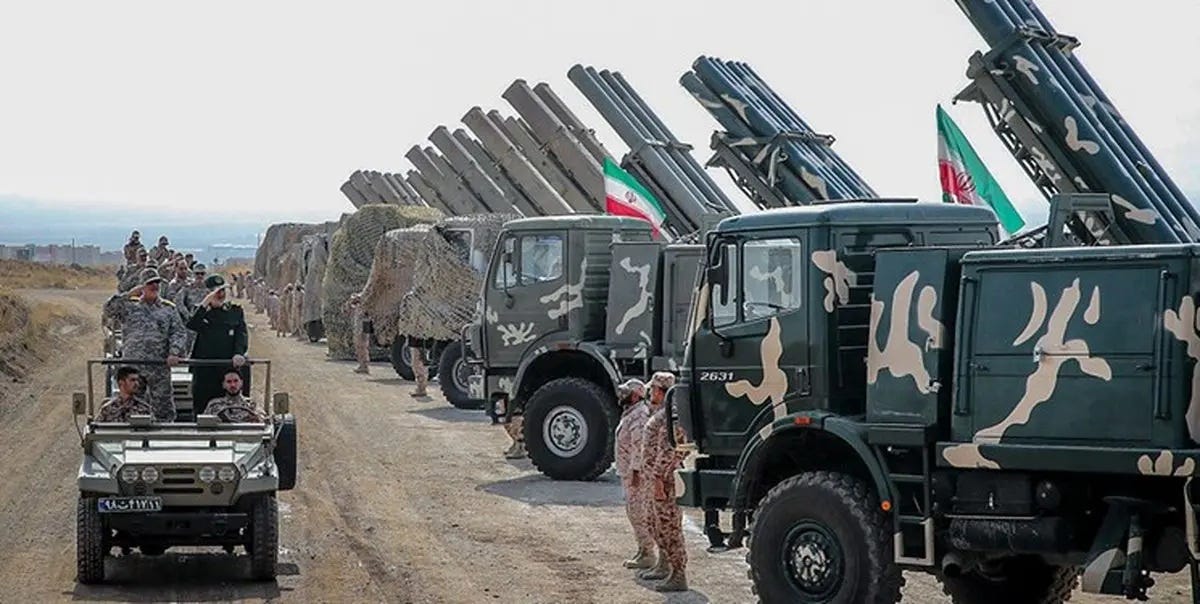
Alongside its rhetoric, Iran has moved to adapt its deterrence posture in practical ways. Since the war, there have been efforts to decentralize missile command structures, build redundancy into command-and-control systems, and disperse political and military decision-making authority. These steps are intended to ensure survivability under attack and preserve the ability to respond even if central nodes are degraded. The underlying assumption is not that conflict can be avoided altogether, but that it must be absorbable. In other words, the state must be able to sustain pressure and retain retaliatory capacity over time.
Yet this effort to restore deterrence has unfolded under conditions of evident strategic stress, reflected in mixed and at times contradictory signaling. A Defense Council statement on January 6 suggested that Iran would not wait for threats to fully materialize before acting. The language was widely interpreted as gesturing toward pre-emptive strikes. At the same time, the Foreign Ministry has publicly rejected the idea that Iran would act preemptively, emphasizing defensive intent and openness to diplomacy. The January 26 statement by the Khatam al-Anbiya Central Headquarters of the IRGC, asserting that Iran would not start a war but would not allow threats to reach the stage of action, has further blurred the line between deterrence and pre-emption.
This ambiguity reflects an unresolved internal debate. Within Iranian policy circles, dilemmas associated with pre-emptive action have been widely discussed: the difficulty of achieving surprise, the likelihood of rapid international isolation, the risks posed by gaps in air defense, and the uncertainty of domestic support in the aftermath of renewed conflict. While waiting carries its own dangers, striking first carries others. These debates, alongside contradictory statements by different state bodies, suggest the absence of a settled consensus.
Overall, while Iran is recalibrating its deterrence posture in anticipation of confrontation, it is doing so without full institutional alignment on escalation thresholds or strategy. Decision-making is therefore taking place in a compressed environment shaped by fear of weakness, heightened signaling, and internal disagreement. Under such conditions, the principal risk is not deliberate escalation but miscalculation. Actions designed to deter could instead narrow the space for control and coordination when it matters most.
The Naval Bet and Its Limits
If confrontation escalates, Iranian planners increasingly see the naval domain as the most plausible arena in which to impose costs without triggering immediate strategic collapse. This assessment rests on two assumptions. First, despite damage to land-based assets, Iran retains residual asymmetric capabilities at sea. Second, the United States remains heavily reliant on naval power for any regional military campaign, making maritime space a natural point of friction.
However, this will not necessarily translate into classic scenarios of escalation such as the full closure of the Strait of Hormuz. Iranian thinking has largely moved away from such maximalist options, which are widely understood to be politically costly and difficult to sustain. Instead, the preferred model could be sustained and selective disruption. This would include harassment, pressure on shipping and naval movements, and controlled actions designed to raise operational and economic costs over time rather than deliver a single dramatic shock. Recent remarks by Mohammad Akbarzadeh, deputy commander of the IRGC Navy, that the Islamic Republic applies “smart control” over the Strait of Hormuz should be understood in this context.
Here, the experience of the Houthis in Yemen looms large in Tehran’s strategic imagination. Iranian officials and analysts have repeatedly pointed to the Houthis’ ability to impose persistent costs on U.S. and allied forces. The lesson drawn is not that asymmetry guarantees victory, but that it can alter U.S. calculations by turning confrontation into a prolonged, messy, and politically unattractive endeavor. In this vein, Ali Akbar Velayati, senior advisor to Supreme Leader Ali Khamenei, said recently that “if Trump believes an action he has initiated may end in failure, he will quickly back down.” Such statements appear to be informed by the experience of the May 2025 U.S.-Houthi ceasefire, which followed a campaign that failed to break the Yemeni movement.
Yet this lesson risks being overlearned. Iran is not the Houthis. Unlike a non-state actor operating from relatively insulated territory, the Islamic Republic has just emerged from violent unrest that exposed deep internal fragilities. Its political system, economy, and social fabric are far more vulnerable to prolonged external pressure. A sustained naval campaign would therefore carry higher internal costs and sharper risks of destabilization than those faced by the Houthis.
Moreover, this logic assumes a degree of control over escalation that may not exist. Israel remains a wild card, capable of acting in ways that override U.S.-Iran assumptions about proportionality and endurance. In such an environment, a strategy built on calibrated disruption could quickly be overtaken by dynamics that neither side fully intends, or can easily contain.
Prepared, but Exposed
The Islamic Republic is not approaching the prospect of war from a position of complacency or denial. The leadership is preparing for confrontation under the assumption that the strategic environment has already crossed into an existential phase, in which restraint is no longer seen as stabilizing and hesitation is treated as an invitation to further pressure. In that sense, the system is ready to go all in if it believes its survival is at stake.
Yet readiness should not be confused with strategic advantage. The Twelve-Day War underscored a fundamental constraint that no amount of organizational adaptation can fully resolve: technological asymmetry. Iran’s losses during that conflict were driven in large part by its inferiority in intelligence, surveillance, precision strike, and air defense relative to Israel. Against the United States, those asymmetries would be deeper and more consequential. Even a well-prepared strategy of decentralization, redundancy, and asymmetric response may be disrupted before it can be fully operationalized.
This vulnerability interacts dangerously with Iran’s evolving deterrence logic. Sustained pressure – whether through naval disruption, economic strangulation, or selective military action – could reinforce the arguments of those inside the system who favor pre-emptive action as the only remaining way to break the cycle. At the same time, the lack of consensus over escalation thresholds, combined with mixed signaling and compressed decision-making, raises the risk that actions intended to deter could instead accelerate confrontation.
What is increasingly clear is that the Islamic Republic no longer views the current standoff as a manageable crisis at the margins. It sees a confrontation that touches the core of regime survival and is prepared to absorb extreme costs in response. Whether such a posture would preserve the system in the event of a major war with the United States is deeply uncertain. What is far more certain is that a conflict shaped by asymmetry, existential stakes, and mutual misreading would generate severe and lasting consequences well beyond Iran itself, destabilizing a region already operating at the edge of strategic tolerance.
I found your article to be information and analysis-dense, with no superfluous content. In addition, I believe you have hit the nail on the head with your analysis. I like forward to reading more of your analysis.
Thank you Mr. Azizi.
As I argued several years ago, by repressing their people, Iran’s leaders are fighting Israel and America with one arm tied behind their back.
https://open.substack.com/pub/mirrorsfortheprince/p/iran-is-fighting-america-and-israel?r=v623r&utm_medium=ios